
logo
logo
cAMP, BioAssay(TM) ELISA Kit (Cyclic Adenosine Monophosphate, Cyclic AMP, Adenosine 3'5'-cyclic Monophosphate)

Cat no: B2671-05

cAMP, BioAssay(TM) ELISA Kit (Cyclic Adenosine Monophosphate, Cyclic AMP, Adenosine 3'5'-cyclic Monophosphate)

Adenosine 3'5'-cyclic monophosphate (cAMP) is a ubiquitous second messenger that mediates a diverse range of cellular processes in all organisms from bacteria to higher eukaryotes. It is converted from adenosine triphosphate (ATP) by adenylyl cyclases (ACs), and is inactivated by phosphodiesterases (PDEs) which catalyze its hydrolysis to 5'-AMP. In mammals, upon interaction with extracellular ligands, G protein coupled receptors (GPCRs) linked to Gas activate the family of nine transmembrane ACs to increase intracellular cAMP. In contrast, GPCRs associated with Gai/o inhibit the synthesis of cAMP by transmembrane ACs. With the exception of AC9, transmembrane ACs can be activated by forskolin, a plant diterpene commonly used to raise cAMP levels in cells. A divalent cation-dependent soluble AC (sAC) isoform also exists. It is activated by bicarbonate ions and can be found in the cytosol and in subcellular organelles. \n\nThe physiological roles of cAMP are mediated via multiple effector molecules. Binding of cAMP to protein kinase A (PKA) holoenzyme induces conformational changes and releases the catalytic subunit to phosphorylate target substrates on serine/threonine residues. cAMP binding to the guanine nucleotide exchange factors Epac1/2 (exchange protein activated by cAMP, also known as cAMP-GEF-I and cAMP-GEF-II) mediates the exchange of GDP for GTP on the small molecular weight G proteins Rap-1 and -2. Activated Rap proteins are important in multiple cellular processes including adhesion and exocytosis. cAMP can also activate cyclic nucleotide-gated ion channels (CNG) by binding directly to the nonselective cation channel proteins that are expressed in various tissues. cAMP signaling is spatially and temporally regulated, allowing for the selective activation of a subset of targets. A-kinase anchoring proteins (AKAPs) provide the platform for the assembly of signalsomes consisting of cAMP effectors (PKA and/or Epac) and their substrates, together with signal terminators including phosphatases and PDEs. \n\nIn response to increases in intracellular cAMP, a wide variety of cell types possess mechanisms for exporting cAMP to the extracellular space. In mammals, plasma and urine cAMP concentrations can become highly elevated under certain physiological conditions. Extracellular cAMP is known to exert physiological actions on diverse cell types, in part through the cAMP-adenosine pathway where cAMP is converted to adenosine via ecto-PDEs and ectonucleotidases. The cAMP Immunoassay is a 3.5h competitive enzyme immunoassay designed to measure cAMP in cell culture supernates, cell lysates, tissue homogenates, plasma, and urine.\n\nSample Type:\nMouse or rat cell culture supernates, cell lysates, tissue homogenates, plasma, and urine.\n\nIntended Use:\nFor the quantitative determination of cyclic AMP (cAMP) concentrations in mouse or rat cell culture supernates, cell lysates, tissue homogenates, plasma, and urine.\n\nSensitivity:\n~0.79pmol/ml\n\nRange:\n0.01-1.54pmol/ml\n\nSpecificity:\nMouse and rat cAMP\n\nTest Principle:\nThis assay is based on the competitive binding technique. A streptavidin-coated plate is incubated with a biotinylated monoclonal antibody specific for cAMP. Following a wash to remove excess monoclonal antibody, cAMP present in a sample competes with a fixed amount of horseradish peroxidase (HRP)-labeled cAMP for sites on the monoclonal antibody. This is followed by another wash to remove excess conjugate and unbound sample. A substrate solution is added to the wells to determine the bound enzyme activity. The color development is stopped and the absorbance is read at 450nm. The intensity of the color is inversely proportional to the concentration of cAMP in the sample.\n\nKit Components:\nStreptavidin Coated Microplate: 96 well polystyrene microplate (12 strips x 8 wells) coated with streptavidin.\nMouse/Rat cAMP Conjugate: 1x6ml of cAMP conjugated to horseradish peroxidase with red dye and preservatives.\ncAMP Standard: 2400pmol of cAMP in buffer with preservatives; lyophilized.\nBiotinylated Primary Antibody: 1x6ml of a mouse monoclonal antibody to cAMP in buffer with blue dye and preservatives.\nCalibrator Diluent RD5-55: 2x21ml of a buffered protein base with preservatives.\nWash Buffer Concentrate: 1x52ml of a 25-fold concentrated solution of buffered surfactant with preservatives\nColor Reagent A: 1x12ml of stabilized hydrogen peroxide\nColor Reagent B: 1x12ml of stabilized chromogen (tetramethylbenzidine)\nStop Solution: 1x23ml of diluted hydrochloric acid\nPlate Sealers: 4 adhesive strips\n\nStorage and Stability:\nSee Kit Protocol for detailed storage instructions.

Prices direct from United States Biological

Quick response times

Exclusive Biosave savings/discounts

SPECIFICATIONS

Catalog Number

B2671-05

Size

1Kit

References

1. Beavo, J.A. and L.L. Brunton (2002) Nat. Rev. Mol. Cell Biol. 3:710. 2. McDonough, K.A. and A. Rodriguez (2012) Nat. Rev. Microbiol. 10:27. 3. Hanoune, J. and N. Defer (2001) Annu Rev Pharmacol Toxicol 41:145. 4. Dessauer, C.W. (2009) Mol. Pharmacol. 76:935. 5. Vezzosi, D. and J. Bertherat (2011) Eur. J. Endocrinol. 165:177. 6. Cumbay, M.G. and V.J. Watts (2004) J. Pharmacol. Exp. Ther. 310:108. 7. Tresguerres, M. et al. (2011) Kidney Int. 79:1277. 8. Susumu, S. and R. Shibasaki (2005) Physiol. Rev. 85:1303. 9. Holz, G.G. et al. (2006) J. Physiol. 577:5. 10. Gloerich, M. and J.L. Bos (2010) Annu. Rev. Pharmacol. Toxicol. 50:355. 11. Kaupp, B. and R. Seifert (2002) Physiol. Rev. 82:769. 12. Pidoux, G. and K. Tasken (2010) J. Mol. Endo. 44:271. 13. Logue, J.S. and J.D. Scott (2010) FEBS Journal 277:4370. 14. Welch, E.J. et al. (2010) Mol. Interv. 10:86. 15. Gloerich, M. et al. (2010) Mol. Cell. Biol. 30:5421. 16. Hantke, K. et al.(2011) J. Bacteriol. 193:1086. 17. Dubey, R.K. et al., (2010) J. Pharmacol. Exp. Ther. 333:808. 18. Hofer, A.M. and K. Lefkimmiatis (2007) Physiology 22:320. 19. Kuzhikandathil, E.V. et al. (2011) J. Biol Chem. 286:32454.

Read more on Supplier website

Applications

ELISA

Reactivities

Hum

More info

Applications

IF

Hosts

Mouse

More info

Applications

ELISA, WB

Hosts

Mouse

Reactivities

Hum

More info

Applications

ELISA, FC, WB

Hosts

Mouse

Reactivities

Hum

More info

Applications

ELISA, FC, IHC, WB

Hosts

Mouse

More info
Advertisehere
BMA Biomedicals Horizontal banner
BMA Biomedicals

Latest promotion FROM:

BMA Biomedicals
View promotion

Latest promotions

Spend less time on DNA cleanup so you can do more science. The MSB Spin PCRapace is the fastest way to purify your DNA from PCR, restriction digestion, and...
New brilliant antibodies, and new lower prices!For flow cytometry reagents in general, \"bright is better.\" The violet-excitable BD Horizon™ BV421 and...
As an incentive to qualify our BSA, we are offering a 20% discount when you purchase your first 100g, 500g or 1000g of any grade of Bovine Serum Albumin....
It is not every day that you are given something for nothing. We are giving away additional spectrophotometer software.Cecil Instruments have enhanced the...
Did your supplier increase the price of Fetal Bovine Serum? Did they substitute the US Origin with USDA? Well say no more! Innovative Research is still...

We're so sure that you'll prefer Cayman Assay kits over your present brand that we're willing to give you a free assay kit to prove it!

For the past decade scientists have extensively used ATS secondary toxin conjugates to make their own targeted toxins for in vitro use.The ability to combine...

10% Discount on 2 Rabbit Polyclonal Antibody Service. With over 20 years experience, SDIX has developed into the premier US custom antibody producer,...
Bulk Cytokines with Custom Vialing.20 - 50% off cytokines, growth factors, chemokines and more...For a limited time Cell Sciences is offering substantial...

Are you planning to have a customised antibody made for your research?Since 2000, Everest has been producing a catalog containing thousands of affinity...
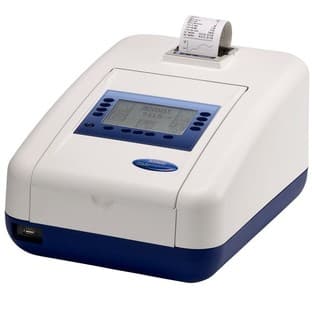
Jenway’s 73 series spectrophotometer range provides four models with a narrow spectral bandwidth of 5nm and an absorbance range of –0.3 to 2.5A,...