
logo
logo
Caspase 3 Assay Kit, BioAssay(TM)

Cat no: C2087-08

Caspase 3 Assay Kit, BioAssay(TM)

Caspases are members of the aspartate-specific cysteinyl protease family that play a central role in apoptosis. Apoptosis is involved in a variety of physiological and pathological events, ranging from normal fetal development to diseases such as cancer, organ failure, and neurodegenerative diseases. Caspase-3 is key biomarker in the assessment of apoptosis and in understanding mechanism of apoptosis induction.\nCaspase-3 Assay Kit provides a convenient means to measure caspase-3 activity in biological samples. In the assay, a specific substrate (N-Ac-DEVD-AFC) is cleaved by active caspase-3, forming a highly fluorescent product. The fluorescence intensity (lexc/em=400/490nm) is proportional to the caspace-3 activity.\n\nKey Features:\nSafe. Non-radioactive assay.\nConvenient and high-throughput. Homogeneous "mix-incubate-measure" type assay. Can be readily automated on HTS liquid handling systems for processing thousands of samples per day.\n\nApplications:\nDetermination of caspase-3 activity in cell and cell lysate.\nHTS screening for apoptosis inducers and inhibitors.\n\nKit Contents:\nAssay Buffer: 12ml Substrate: 240ul\nDTT Solution: 240ul\nStorage conditions: This product is shipped at room temperature. Upon delivery, store all reagents at -20 degrees C. Shelf life of 12 months after receipt.\nPrecautions: reagents are for research use only. Normal precautions for laboratory reagents should be exercised while using the reagents. Please refer to Material Safety Data Sheet for detailed information.\n\n96-Well Assay Procedure:\nNote: The following procedure is for standard assays in a 96-well plate. If cells are cultured in plates other than a 96-well plate, it is necessary to prepare the cell lysate (See General Considerations). Duplicate assays are recommended for controls and samples.\n1. Cell culture. Seed 100ul of 1,000 to 100,000 cells into wells of a sterile black clear-bottom 96-well plate (Note: The cell number to be used depends on the cell line). Incubate overnight at 37 degrees C in a cell culture incubator.\n2. Cell treatment. Add 10ul test compounds (e.g. apoptosis inducers or inhibitors) at desired concentration, and 10ul vehicle (medium in which the test compound is dissolved) as a control. Incubate cells for a desired period of time.\n3. Caspase-3 Assay. Prior to assay, bring all reagents to room temperature. Briefly centrifuge tubes. Prepare enough Working Reagent for all assay wells. For each well, mix 100ul Assay Buffer, 2ul Substrate and 2ul DTT.\nRemove culture media from assay wells. For adherent cells, simply aspirate the culture media from wells. For suspension cells, centrifuge cells for 5 min at 500 x g, carefully remove media by aspiration. Immediately add 100ul Working Reagent to each assay well. Mix the reagents completely by shaking the plate for 60 sec at 100-200 rpm on a plate shaker. The Working Reagent lyses cells and supports optimal caspase-3 activity. Incubate plate at 37 degrees C for 60 min in the dark.\n4. Read fluorescence intensity at lexc/em=400/490 nm.\nNote: If the caspase-3 activity is low, increase the incubation time, or use more cells.\n\nCalculation:\nSubtract the fluorescence intensity values from that of the control wells. The DF values represent the relative caspase-3 activity.\n\nGeneral Considerations:\nFor cells not cultured in a 96-well plate, cell lysates are prepared separately and used for the caspase assay. After cells have been treated with test compounds for the desired period of treatment, remove culture medium. For adherent cells simply aspirate the culture medium. For suspension cells centrifuge cells at 500 x g for 5 min and aspirate the medium. Lyse cells by adding 300ul per 106 cells of 50mM Hepes (pH 7.2), 100mM NaCl, 0.5 % (v/v) Triton X-100. Shake the cell suspension on for 30 min at 4 degrees C. Centrifuge the cell suspension at 2,500 x g for 10 min at 4 degrees C. Transfer supernatants to clean tubes. If not assayed on the same day, lysates can be stored at -80 degrees C for one month. To assay, add 50ul of sample lysates into separate wells of a black 96-well plate. Immediately add 100ul Working Reagent to each assay well. Incubate plate at 37C for 60 min in the dark. Read fluorescence intensity lexc/em=400/490 nm.\n\nMaterials Required, But Not Provided:\nPipetting devices, centrifuge tubes, black flat bottom 96-well plates and plate reader.

Prices direct from United States Biological

Quick response times

Exclusive Biosave savings/discounts

SPECIFICATIONS

Catalog Number

C2087-08

Size

1Kit

References

1. Hug H et al (1999). Rhodamine 110-linked amino acids and peptides as substrates to measure caspase activity upon apoptosis induction in intact cells. Biochemistry 38:13906-11.\n2. Jones J, et al (2000). Development and application of a GFP-FRET intracellular caspase assay for drug screening. J Biomol Screen. 5:307-18.\n3. Wang ZQ, et al (2005). N-DEVD-N'-morpholinecarbonyl-rhodamine 110: novel caspase-3 fluorogenic substrates for cell-based apoptosis assay. Bioorg Med Chem Lett. 15:2335-8.

Read more on Supplier website

Applications

ELISA

Reactivities

Hum

More info

Applications

IF

Hosts

Mouse

More info

Applications

ELISA, WB

Hosts

Mouse

Reactivities

Hum

More info

Applications

ELISA, FC, WB

Hosts

Mouse

Reactivities

Hum

More info

Applications

ELISA, FC, IHC, WB

Hosts

Mouse

More info
Advertisehere
BMA Biomedicals Horizontal banner
BMA Biomedicals

Latest promotion FROM:

BMA Biomedicals
View promotion

Latest promotions

Spend less time on DNA cleanup so you can do more science. The MSB Spin PCRapace is the fastest way to purify your DNA from PCR, restriction digestion, and...
New brilliant antibodies, and new lower prices!For flow cytometry reagents in general, \"bright is better.\" The violet-excitable BD Horizon™ BV421 and...
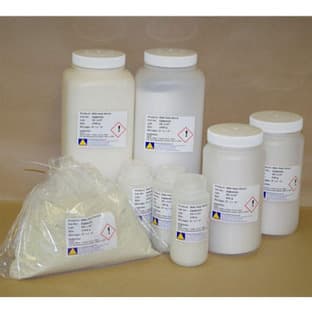
As an incentive to qualify our BSA, we are offering a 20% discount when you purchase your first 100g, 500g or 1000g of any grade of Bovine Serum Albumin....
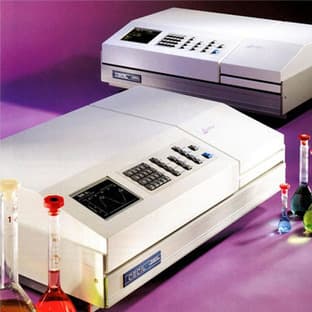
It is not every day that you are given something for nothing. We are giving away additional spectrophotometer software.Cecil Instruments have enhanced the...
Did your supplier increase the price of Fetal Bovine Serum? Did they substitute the US Origin with USDA? Well say no more! Innovative Research is still...

For the past decade scientists have extensively used ATS secondary toxin conjugates to make their own targeted toxins for in vitro use.The ability to combine...

We're so sure that you'll prefer Cayman Assay kits over your present brand that we're willing to give you a free assay kit to prove it!

10% Discount on 2 Rabbit Polyclonal Antibody Service. With over 20 years experience, SDIX has developed into the premier US custom antibody producer,...
Bulk Cytokines with Custom Vialing.20 - 50% off cytokines, growth factors, chemokines and more...For a limited time Cell Sciences is offering substantial...

Are you planning to have a customised antibody made for your research?Since 2000, Everest has been producing a catalog containing thousands of affinity...
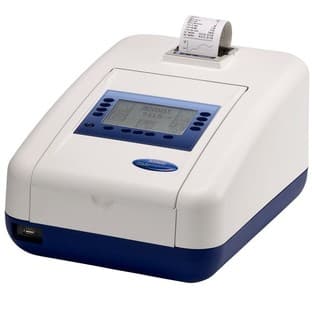
Jenway’s 73 series spectrophotometer range provides four models with a narrow spectral bandwidth of 5nm and an absorbance range of –0.3 to 2.5A,...