
logo
logo
CEA, BioAssay(TM) ELISA Kit (Carcinoembryonic Antigen-related Cell Adhesion Molecule 5, Carcinoembryonic Antigen, Meconium Antigen 100, CD66e, CEACAM5)

Cat no: C1300-06A

CEA, BioAssay(TM) ELISA Kit (Carcinoembryonic Antigen-related Cell Adhesion Molecule 5, Carcinoembryonic Antigen, Meconium Antigen 100, CD66e, CEACAM5)

Carcinoembryonic antigen (CEA) was first described in 1965 by Gold and Freedman when they identified an antigen that was present in both fetal colon and colon adenocarcinoma but that appeared to be absent from healthy adult colon. CEA is a glycoprotein containing approximately 50% carbohydrate with a molecular weight of 180kD. CEA and related genes make up the CEA family belonging to the immunoglobulin superfamily. In humans, the carcinoembryonic antigen family consists of 29 genes, 18 of which are normally expressed.\n\nCEA has proven to be a suitable target antigen for the detection of primary and metastatic colorectal and some other carcinomas. Although sera from healthy individuals and from patients with other diseases generally had low levels of CEA, CEA is one of the most widely used tumor markers worldwide. Its main application is mostly in gastrointestinal cancers, especially in colorectal malignancy. CEA assays are now generally accepted clinically as a useful and cost- efficient tool in monitoring of colon cancer following surgery.\n\nIntended Use:\nHuman Carcinoembryonic Antigen (human CEA) ELISA kit is to be used for the in vitro quantitative determination of human CEA in human serum, human plasma, cell lysate and buffered solution. The assay will recognize native CEA. This kit has been configured for research use only and is not to be used in diagnostic procedures.\n\nSensitivity:\nThe minimal detectable dose of human CEA was calculated to be 0.15ng/ml, by subtracting two standard deviations from the mean of 10 zero standard replicates (ELISA buffer, S0) and intersecting this value with the standard curve obtained in the same calculation.\n\nSpecificity:\nThe following substances were tested and found to have no cross-reactivity: human\n\nTest Principle:\nThe design of this assay is based on a sandwich Enzyme-Linked Immunosorbent Assay (ELISA). The microtiter plate provided in this kit has been pre-coated with a monoclonal antibody specific to human CEA. Samples are pippetted into these wells. Nonbound CEA and other components of the sample should be removed by washing, then biotin-conjugated monoclonal antibody specific to CEA added. In order to quantitatively determine the amount of CEA present in the sample, Avidin conjugated to Horseradish Peroxidase (HRP) should be added to each microplate well. The final step, a TMB-substrate solution added to each well. Finally, a sulfuric acid solution is added and the resulting yellow colored product is measured at 450nm. Since the increases in absorbency is directly proportional to the amount of captured CEA.\n\nKit Components:\nMicroplate: 1x96 wells\nIncubation buffer: 1x30ml\nWashing buffer, (10x): 1x100ml\nStandard protein: 1 glass vial lyophilized\nStandard/sample dilution buffer: 1x25ml\nSecond antibody: 1 glass vial lyophilized\nAV-HRP: 1x150ul\nSecondary antibody/AV-HRP dilution buffer: 1x25ml\nSubstrate (TMB): 1x20ml\nStop solution: 1x20ml\n\nStorage and Stability:\nStore components at 4 degrees C. Stable for at least 6 months. For maximum recovery of product, centrifuge the original vial after thawing and prior to removing the cap.

Prices direct from United States Biological

Quick response times

Exclusive Biosave savings/discounts

SPECIFICATIONS

Catalog Number

C1300-06A

Size

96Tests

Applications

ELISA

References

1. Duffy MJ. 2001, Clin Chem. 47(4):624-630. 2. Hammarstrom S. 1999, Semin Cancer Biol. 9(2):67-81. 3. Ducker TP and Skubitz KM. 1992, J Leukoc Biol. 52(1):11-16.

Read more on Supplier website
Advertisehere
BMA Biomedicals Horizontal banner
BMA Biomedicals

Latest promotion FROM:

BMA Biomedicals
View promotion

Latest promotions

Spend less time on DNA cleanup so you can do more science. The MSB Spin PCRapace is the fastest way to purify your DNA from PCR, restriction digestion, and...
As an incentive to qualify our BSA, we are offering a 20% discount when you purchase your first 100g, 500g or 1000g of any grade of Bovine Serum Albumin....
New brilliant antibodies, and new lower prices!For flow cytometry reagents in general, \"bright is better.\" The violet-excitable BD Horizon™ BV421 and...
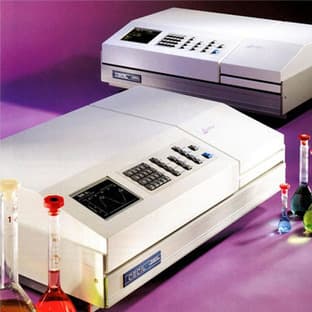
It is not every day that you are given something for nothing. We are giving away additional spectrophotometer software.Cecil Instruments have enhanced the...

10% Discount on 2 Rabbit Polyclonal Antibody Service. With over 20 years experience, SDIX has developed into the premier US custom antibody producer,...
Did your supplier increase the price of Fetal Bovine Serum? Did they substitute the US Origin with USDA? Well say no more! Innovative Research is still...

We're so sure that you'll prefer Cayman Assay kits over your present brand that we're willing to give you a free assay kit to prove it!

For the past decade scientists have extensively used ATS secondary toxin conjugates to make their own targeted toxins for in vitro use.The ability to combine...
Bulk Cytokines with Custom Vialing.20 - 50% off cytokines, growth factors, chemokines and more...For a limited time Cell Sciences is offering substantial...

Are you planning to have a customised antibody made for your research?Since 2000, Everest has been producing a catalog containing thousands of affinity...
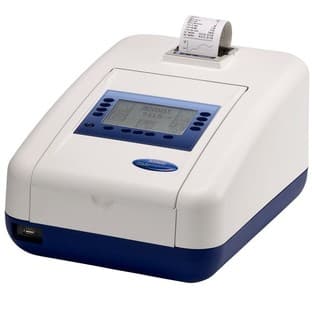
Jenway’s 73 series spectrophotometer range provides four models with a narrow spectral bandwidth of 5nm and an absorbance range of –0.3 to 2.5A,...