
logo
logo
D-Lactate Assay Kit, BioAssay(TM), Fluorimetric

Cat no: L1011-05

D-Lactate Assay Kit, BioAssay(TM), Fluorimetric

Lactate is generated by lactate dehydrogenase (LDH) under hypoxic or anaerobic conditions. Monitoring lactate levels is, therefore, a good indicator of the balance between tissue oxygen demand and utilization and is useful when studying cellular and animal physiology. D-Lactate is produced in only minor quantities in animals and measuring for D-lactate in animal samples is a means to determine the presence of bacterial infection.\n\nSimple, direct and automation-ready procedures for measuring lactate concentration are very desirable. Lactate assay kit is based on lactate dehydrogenase catalyzed oxidation of lactate, in which the formed NADH reduces a probe into a highly fluorescent product. The fluorescence intensity of this product, measured at lex/em=530/585 nm, is proportional to the lactate concentration in the sample.\n\nApplications:\nDirect Assays: D-lactate in serum, plasma, urine, cell media samples and other biological samples.\n\nKey Features:\nSensitive and accurate. Detection limit of 1uM and linearity up to 50uM D-lactate in 96-well plate assay.\nConvenient. The procedure involves adding a single working reagent, and reading the fluorescence after 60 min. Room temperature assay.\nHigh-throughput. Can be readily automated as a high-throughput 96-well plate assay for thousands of samples per day.\n\nKit Contents:\nAssay Buffer: 10ml Enzyme A: 120ul\nNAD Solution: 1ml Enzyme B: 120ul\nProbe: 750ul Standard: 1ml\n\nStorage:\nStore all reagents at -20 degrees C. Shelf life: 6 months after receipt.\nPrecautions: reagents are for research use only. Normal precautions for laboratory reagents should be exercised while using the reagents. Please refer to Material Safety Data Sheet for detailed information.\n\nSample Preparation And Considerations:\nThe following substances interfere and should be avoided in sample preparation: EDTA (>0.5mM), ascorbic acid, SDS (>0.2%), sodium azide, NP-40 (>1%) and Tween-20 (>1%). Samples suspected of having endogenous L-LDH enzyme activity (e.g. serum, plasma, culture medium with FBS, etc.) should be deproteinated using a 10 kDa spin filter (e.g. Microcon YM-10). Deproteinated serum should be diluted 3X with dH2O. Samples containing higher than 50uM pyruvate require an internal standard.\n\nProtocol:\n1. Standard Curve. Prepare 1000ul 40uM D-lactate Premix by mixing 2ul 20mM Standard and 998ul distilled water. For cell culture samples, prepare 1000ul 40uM D-lactate Premix by mixing 2ul 20mM Standard and 998ul culture medium without serum. Dilute standard as follows.\nNo Premix+H2O or Medium D-Lactate (uM)\n1 100ul+0ul 40\n2 60ul+40ul 24\n3 30ul+70ul 12\n4 0ul+100ul 0\nTransfer 50ul standards into wells of a black, flat bottom 96-well plate. Samples. Add 50ul sample to two separate wells. Set up two reactions for each sample: one with added Enzyme A (Sample) and a No Enzyme A control (Sample Blank). Samples requiring an internal standard, will need three separate reactions: 1) Sample plus Standard, 2) Sample alone and 3) Sample Blank. For the internal standard first prepare 400ul 250uM D-lactate standard by mixing 5ul 20mM Standard and 395ul dH2O. For the Sample plus Standard well, add 5ul 250uM D-lactate and 45ul sample. For the Sample and Sample Blank wells, add 5ul dH2O and 45ul sample.\n2. Reagent Preparation. Spin the Enzyme tubes briefly before pipetting. For each Sample and Standard well, prepare Working Reagent by mixing 40ul Assay Buffer, 1ul Enzyme A, 1ul Enzyme B, 10ul NAD and 5ul Probe. Fresh reconstitution is recommended. For the Sample Blanks, the Working Reagent includes 40ul Assay Buffer, 1ul Enzyme B, 10ul NAD and 5ul Probe (NO Enzyme A).\n3. Reaction. Add 50ul Working Reagent per reaction well quickly. Tap plate to mix briefly and thoroughly. Incubate for 60 min at RT protected from light.\n4. Read fluorescence lex/em=530/585 nm.\n\nCalculation:\nPlot the D-lactate Standard Curve and determine its slope. The D-lactate concentration of the sample is computed as follows:\n[D-Lactate] = FSAMPLE

Prices direct from United States Biological

Quick response times

Exclusive Biosave savings/discounts

SPECIFICATIONS

Catalog Number

L1011-05

Size

1Kit

References

1. Ewaschuk JB et al (2005). D-lactate in human and ruminant metabolism. J Nutr. 135(7): 1619-25.\n2. Mack DR (2004). D(-)-lactic acid-producing probiotics, D(-)-lactic acidosis and infants. Can J Gastroenterol. 18(11): 671-5.\n3. Uribarri J et al (1998). D-lactic acidosis. A review of clinical presentation, biochemical features, and pathophysiologic mechanisms. Medicine (Baltimore) 77(2): 73-82.

Read more on Supplier website

Applications

FC

Hosts

Mouse

Reactivities

Hum

More info

Applications

FC

Hosts

Mouse

Reactivities

Hum

More info

Applications

FC

Hosts

Mouse

Reactivities

Hum

More info

Applications

FC

Hosts

Mouse

Reactivities

Hum

More info

Applications

FC

Hosts

Mouse

Reactivities

Hum

More info

Applications

FC

Hosts

Mouse

Reactivities

Hum

More info

Applications

FC

Hosts

Mouse

Reactivities

Hum

More info

Applications

FC

Hosts

Mouse

Reactivities

Hum

More info
Advertisehere
BMA Biomedicals Horizontal banner
BMA Biomedicals

Latest promotion FROM:

BMA Biomedicals
View promotion

Latest promotions

Spend less time on DNA cleanup so you can do more science. The MSB Spin PCRapace is the fastest way to purify your DNA from PCR, restriction digestion, and...
New brilliant antibodies, and new lower prices!For flow cytometry reagents in general, \"bright is better.\" The violet-excitable BD Horizon™ BV421 and...
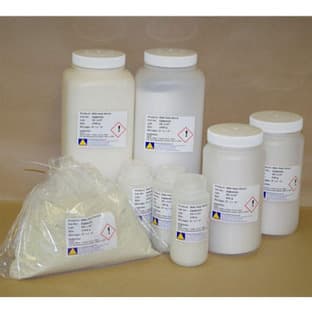
As an incentive to qualify our BSA, we are offering a 20% discount when you purchase your first 100g, 500g or 1000g of any grade of Bovine Serum Albumin....
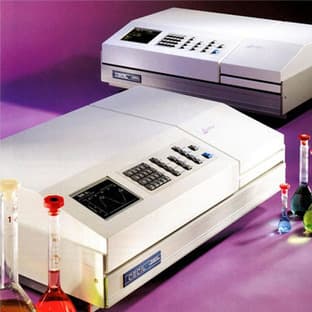
It is not every day that you are given something for nothing. We are giving away additional spectrophotometer software.Cecil Instruments have enhanced the...
Did your supplier increase the price of Fetal Bovine Serum? Did they substitute the US Origin with USDA? Well say no more! Innovative Research is still...

10% Discount on 2 Rabbit Polyclonal Antibody Service. With over 20 years experience, SDIX has developed into the premier US custom antibody producer,...

We're so sure that you'll prefer Cayman Assay kits over your present brand that we're willing to give you a free assay kit to prove it!

For the past decade scientists have extensively used ATS secondary toxin conjugates to make their own targeted toxins for in vitro use.The ability to combine...
Bulk Cytokines with Custom Vialing.20 - 50% off cytokines, growth factors, chemokines and more...For a limited time Cell Sciences is offering substantial...
Are you planning to have a customised antibody made for your research?Since 2000, Everest has been producing a catalog containing thousands of affinity...

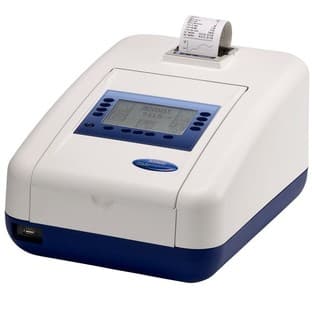
Jenway’s 73 series spectrophotometer range provides four models with a narrow spectral bandwidth of 5nm and an absorbance range of –0.3 to 2.5A,...