
logo
logo
DNA Assay Kit, BioAssay(TM)

Cat no: D3878-07

DNA Assay Kit, BioAssay(TM)

DNA quantitation is a common practice in molecular biology. Very often DNA is available in minute quantities and the traditional UV 260 nm absorbance method requires microgram quantities for reliable results. Accurate determination of DNA concentration, especially when DNA is present at low concentrations, is crucial for reproducible results in sequencing, cloning, transfection and DNA labeling.\n\nSimple, direct and automation-ready procedures for measuring DNA concentration are very desirable. DNA assay kit is designed to accurately measure nanogram quantities of plasmid DNA, cDNA, DNA following polymerase chain reaction and DNA eluted from gels. The improved method utilizes Hoechst dye that binds specifically with double-stranded DNA. The fluorescence intensity, measured at 450nm (lexc=350nm), is directly proportional to the DNA concentration in the sample. The optimized formulation substantially reduces interference by substances in the raw samples.\n\nKey Features:\nSensitive and accurate. Linear detection range 2 ng to 40 ng (100пїЅ2,000 ng/mL) calf thymus DNA in 96-well plate assay.\nSimple and high-throughput. The пїЅmix-and-readпїЅ procedure involves addition of a single working reagent and reading the fluorescence intensity. Can be readily automated as a high-throughput assay for thousands of samples per day.\nLow interference. RNA, salt (up to 3M NaCl), detergent (< 0.01% SDS) and common DNA extraction buffer do not interfere in the assay.\n\nApplications:\nDirect Assays: plasmid DNA, genomic DNA, cDNA, DNA following polymerase chain reaction, and DNA extracted from gel and other matrices.\n\nKit Contents: (250 tests in 96-well plates)\nReagent: 50ml Standard: 1ml 10 ug/mL calf thymus DNA\nStorage conditions. The kit is shipped at room temperature. Store the DNA standard at -20 degrees C and the Reagent at 2-8 degrees C. Shelf life: 12 months after receipt.\nPrecautions: reagents are for research use only. Normal precautions for laboratory reagents should be exercised while using the reagents. Please refer to Material Safety Data Sheet for detailed information.\n\nProcedures:\nPreparation: bring reagents to room temperature before use.\nProcedure using 96-well plate:\n1. Prepare 400ul 2000 ng/mL Premix by mixing 80ul Standard and 320ul TE buffer (10mM Tris, 1mM EDTA, pH 7.4). Dilute standards as follows. Transfer 20ul diluted standards and samples into wells of a black flat-bottom 96-well plate. Store standards at 4 degrees C for future use.\nNo Premix+TE Vol (ul) DNA (ng/mL)\n1 100ul+0ul 100 2000\n2 80ul+20ul 100 1600\n3 60ul+40ul 100 1200\n4 40ul+60ul 100 800\n5 30ul+70ul 100 600\n6 20ul+80ul 100 400\n7 10ul+90ul 100 200\n8 0ul+100ul 100 0\n2. Add 200ul working reagent and tap lightly to mix.\n3. Incubate 1 min at room temperature and read fluorescence emission at 440-460nm (peak 450nm, excitation at 340-370 nm).\nProcedure using cuvette:\n1. Transfer 100ul diluted standards and samples to cuvets.\n2. Add 1000ul working reagent and tap lightly to mix.\n3. Incubate 1 min at room temperature and read fluorescence intensity at 440-460nm (peak 450nm, excitation at 340-360 nm).\n\nCalculation:\nSubtract blank fluorescence value (water, #8) from the standard values and plot DF against standard DNA concentrations. Determine the slope using linear regression fitting. The DNA concentration of Sample is calculated as\n=\nFSAMPLEпїЅFBLANK\nSlope X n (ng/mL)\nFSAMPLE and FBLANK are fluorescence values of the sample and water or buffer in which the sample was diluted, respectively. n is the sample dilution factor.\n\nMaterials Required, But Not Provided:\nPipeting devices and accessories. 1 x TE buffer.\nProcedure using 96-well plate:\nBlack 96-well plates (e.g. Corning) and fluorescence plate reader.\nProcedure using cuvette:\nFluorescence spectrophotometer and fluorometric cuvets.\n\nGeneral Considerations:\n(1) For samples with unknown DNA concentration, pipet 1ul sample and mix with 99ul TE buffer. Make further serial 10-fold dilutions. Assay all diluted samples and choose dilutions at which the fluorescence intensity values fall within the linear calibration range to calculate sample DNA concentration. (2). Calf thymus DNA serves as a standard for plant and animal DNA, because the AT content is conserved among most DNAs from these two species. For bacterial DNA, a different standard should be used that best matches the sample DNA content. (3). Fluorescence intensity is half when binding to the same single-stranded DNA. Short single-stranded DNA pieces do not fluoresce with this dye.

Prices direct from United States Biological

Quick response times

Exclusive Biosave savings/discounts

SPECIFICATIONS

Catalog Number

D3878-07

Size

1Kit

References

1. Bachoon DS, Otero E, Hodson RE (2001). Effects of humic substances on fluorometric DNA quantification and DNA hybridization. J Microbiol Methods 47: 73-82.\n2. Teare JM et al. (1997). Measurement of nucleic acid concentrations using the DyNA Quant and the GeneQuant. Biotechniques 22: 1170-4.\n3. Bester MJ, Potgieter HC, Vermaak WJ (1994). Cholate and pH reduce interference by sodium dodecyl sulfate in the determination of DNA with Hoechst. Anal Biochem. 223: 299-305.

Read more on Supplier website
Advertisehere
BMA Biomedicals Horizontal banner
BMA Biomedicals

Latest promotion FROM:

BMA Biomedicals
View promotion

Latest promotions

Spend less time on DNA cleanup so you can do more science. The MSB Spin PCRapace is the fastest way to purify your DNA from PCR, restriction digestion, and...
New brilliant antibodies, and new lower prices!For flow cytometry reagents in general, \"bright is better.\" The violet-excitable BD Horizon&trade; BV421 and...

As an incentive to qualify our BSA, we are offering a 20% discount when you purchase your first 100g, 500g or 1000g of any grade of Bovine Serum Albumin....
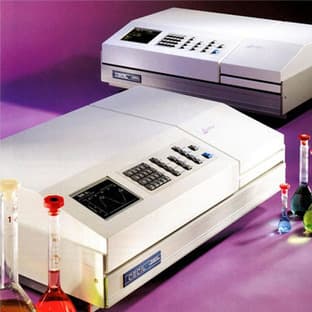
It is not every day that you are given something for nothing. We are giving away additional spectrophotometer software.Cecil Instruments have enhanced the...

Did your supplier increase the price of Fetal Bovine Serum? Did they substitute the US Origin with USDA? Well say no more! Innovative Research is still...

We're so sure that you'll prefer Cayman Assay kits over your present brand that we're willing to give you a free assay kit to prove it!

For the past decade scientists have extensively used ATS secondary toxin conjugates to make their own targeted toxins for in vitro use.The ability to combine...

10% Discount on 2 Rabbit Polyclonal Antibody Service. With over 20 years experience, SDIX has developed into the premier US custom antibody producer,...

Bulk Cytokines with Custom Vialing.20 - 50% off cytokines, growth factors, chemokines and more...For a limited time Cell Sciences is offering substantial...
Are you planning to have a customised antibody made for your research?Since 2000, Everest has been producing a catalog containing thousands of affinity...

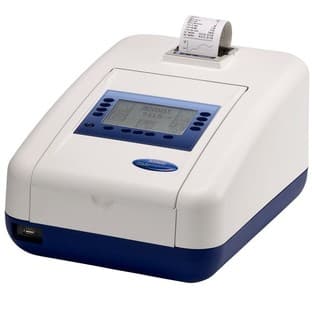
Jenway&rsquo;s 73 series spectrophotometer range provides four models with a narrow spectral bandwidth of 5nm and an absorbance range of &ndash;0.3 to 2.5A,...