
logo
logo
Endothelin-1, Human BioAssay(TM) ELISA Kit

Cat no: E3650-03

Endothelin-1, Human BioAssay(TM) ELISA Kit

Endothelin-1 (ET-1), a peptide of 21aa residues, is a pleiotropic molecule best known for its action as a potent vasoconstrictor (1). Originally isolated from porcine aortic endothelial cells, ET-1 is one of a family of three proteins encoded by distinct genes that also includes Endothelin-2 (ET-2) and Endothelin-3 (ET-3) (2, 3). ET-2 and ET-3 differ from ET-1 by 2 and 6aa, respectively (1, 2). All members of the Endothelin family contain two essential disulfide bridges and six conserved aa residues at the C-terminus. Human ET-1 is initially synthesized as a pre-pro-polypeptide of 212aa (2, 4). It is proteolytically cleaved by a signal peptidase to produce pro-ET-1 and further processed by a Furin-like protease to yield a 38 aa peptide termed Big ET-1 (5, 6). Big ET-1 is then cleaved by the membrane-bound metalloprotease Endothelin-converting enzyme (ECE-1), producing the potent 21 aa mature form ET-1 (aa 1-21) (7, 8). Alternatively, ET-1 may exist in an active 31 aa form (ET-1 (aa 1-31)) following cleavage of Big ET-1 by chymase (9-12). The vascular endothelium is an abundant source of ET-1 (3, 13). It may also be expressed by leukocytes, smooth muscle cells, mesangial cells, cardiac myocytes, and astrocytes (14, 15). ET-1 can be induced in endothelial cells by many factors including mechanical stimulation, various hormones, and pro-inflammatory cytokines (16). Production is inhibited by nitric oxide (NO), Prostacyclin, and atrial natriuretic peptide (ANP) (17-19). Two receptors for the Endothelin family have been cloned and designated ETA and ETB (20-23). ETA and ETB belong to the large family of heptahelical G protein-coupled receptors. The ETA receptor shows a higher affinity for ET-1 than for ET-2 and lowest affinity for ET-3, while the ETB receptor shows approximately equal affinity for each of the three Endothelins (21, 22, 24). ETA is primarily responsible for the vasoconstrictor effects of ET-1 and is expressed by blood vessel smooth muscle cells (25, 26). The ETB receptor is also present in smooth muscle and the endothelia of blood vessels, kidney, lung, and brain (27). ET-1 has the ability to activate an array of signaling cascades including classical phosphatidylinositol turnover pathways leading to downstream PKC activation and Ca2+ mobilization (28-32). Other potential signaling mediators activated or produced by ET-1 include PI 3-kinase/Akt, NO, FAK, and Rho GTPases (32-37). ET-1 signaling may also be mediated indirectly via transactivation of the EGF receptor leading to downstream signaling by Ras and MAP kinases (38, 39). Injection of a single dose of ET-1 produces an initial decrease in systemic blood pressure followed by a prolonged increase in blood pressure (16, 40, 41). Blockade of Endothelin receptors with a systemic injection of an ETA/ETB antagonist causes progressive vasodilation, and elevated levels of ET-1 are found in some forms of human hypertension (42, 43). ET-1 also stimulates cardiac contraction and the growth of cardiac myocytes, regulates the release of vasoactive substances, and stimulates smooth muscle cell mitogenesis (32, 44-46). It also acts as a pro-survival factor for endothelial cells and regulates secretion by hypothalamic and pituitary cells (47, 48). ET-1 may control inflammatory responses by promoting the adhesion and migration of neutrophils and stimulating the production of pro-inflammatory cytokines (49-53). It has also been implicated in cancer progression at several levels including regulating the proliferation and migration of tumor cells and acting as a pro-angiogenic factor (54, 55). In addition, ET-1 has putative roles in other pathologies including septic shock, atherosclerosis, heart failure, renal insufficiency, pulmonary hypertension, and cerebrovascular conditions associated with subarachnoid hemorrhage (15, 56-63).\n\nThe Human Endothelin-1 immunoassay is a 4.5 hour solid phase ELISA designed to measure ET-1 in cell culture supernates, serum, plasma, and urine. It contains synthetic ET-1 and antibodies raised against synthetic ET-1. This immunoassay has been shown to accurately quantitate synthetic and naturally occurring ET-1.\n\nTest Principle:\nThis assay employs the quantitative sandwich enzyme immunoassay technique. A monoclonal antibody specific for ET-1 has been pre-coated onto a microplate. Standards and samples are pipetted into the wells and any ET-1 present is bound by the immobilized antibody. After washing away any unbound substances, an enzyme-linked monoclonal antibody specific for ET-1 is added to the wells. Following a wash to remove any unbound antibody-enzyme reagent, a substrate solution is added to the wells and color develops in proportion to the amount of ET-1 bound in the initial step. The color development is stopped and the intensity of the color is measured.\n\nSample Type:\nSerum/Plasma/Urine-Samples from apparently healthy volunteers were evaluated for the presence of Endothelin-1 in this assay. No medical histories were available for the donors used in this study.\n\nSpecificity: \nThis assay recognizes synthetic and natural human Endothelin-1. The factors listed below were prepared at 250pg/ml in Calibrator Diluent and assayed for cross-reactivity. Preparations of the following factors at 250pg/ml in a low level control were assayed for interference. No significant cross-reactivity or interference was observed.\n\nSensitivity: \nThirty-four assays were evaluated and the minimum detectable dose (MDD) of Endothelin-1 ranged from 0.031-0.207pg/ml. The mean MDD was 0.087pg/ml. The MDD was determined by adding two standard deviations to the mean optical density value of twenty zero standard replicates and calculating the corresponding concentration.\n\nPrecision:\nIntra-assay:\nMean (ng/ml): 3.00, 7.34, 14.7\nStandard Deviation: 0.120, 0.170, 0.280\nCV (%): 4.0, 2.3, 1.9\nInter-assay:\nMean (ng/ml): 3.05, 7.43, 14.4\nStandard Deviation: 0.231, 0.438, 0.759\nCV (%): 7.6, 5.9, 5.3\n\nKit Components:\nEndothelin-1 Microplate 1x96 well polystyrene microplate (12 strips of 8 wells) coated with a rat monoclonal antibody against Endothelin-1, 1 plate.\nEndothelin-1 Conjugate 21ml/vial of a mouse monoclonal antibody against Endothelin-1 conjugated to horseradish peroxidase with preservatives, 1 vial.\nEndothelin-1 Standard 250pg/vial of synthetic Endothelin-1 in a buffered protein base with preservatives; lyophilized, 1 vial.\nAssay Diluent RD1-105 18mL/vial of a buffered protein solution with preservatives, 1 vial.\nCalibrator Diluent RD5-48 Concentrate 21ml/vial of a buffered protein solution with preservatives, 1 vial.\nWash Buffer Concentrate 21ml/vial of a 25-fold concentrated solution of buffered surfactant with preservatives, 1 vial.\nColor Reagent A 12.5ml/vial of stabilized hydrogen peroxide, 1 vial.\nColor Reagent B 12.5ml/vial of stabilized chromogen (tetramethylbenzidine), 1 vial.\nStop Solution 6ml/vial of 2 N sulfuric acid, 1 vial.\nPlate Covers-Adhesive strips, 4 strips.\n\nStorage and Stability:\nStore components at 4 degrees C. Stable for at least 6 months. For maximum recovery of product, centrifuge the original vial after thawing and prior to removing the cap.

Prices direct from United States Biological

Quick response times

Exclusive Biosave savings/discounts

SPECIFICATIONS

Catalog Number

E3650-03

Size

1Kit

References

1. Kawanabe, Y. and S.M. Nauli (2010) Cell. Mol. Life Sci. [Sept. 17 epub]. 2. Inoue, A. et al. (1989) Proc. Natl. Acad. Sci. USA 86:2863. 3. Yanagisawa, M. et al. (1988) Nature 332:411. 4. Inoue, A. et al. (1989) J. Biol. Chem. 264:14954. 5. Blais, V. et al. (2002) FEBS Lett. 524:43. 6. Denault, J.B. et al. (1995) FEBS Lett. 362:276. 7. D

Read more on Supplier website
Advertisehere
BMA Biomedicals Horizontal banner
BMA Biomedicals

Latest promotion FROM:

BMA Biomedicals
View promotion

Latest promotions

Spend less time on DNA cleanup so you can do more science. The MSB Spin PCRapace is the fastest way to purify your DNA from PCR, restriction digestion, and...
As an incentive to qualify our BSA, we are offering a 20% discount when you purchase your first 100g, 500g or 1000g of any grade of Bovine Serum Albumin....

New brilliant antibodies, and new lower prices!For flow cytometry reagents in general, \"bright is better.\" The violet-excitable BD Horizon™ BV421 and...
It is not every day that you are given something for nothing. We are giving away additional spectrophotometer software.Cecil Instruments have enhanced the...
10% Discount on 2 Rabbit Polyclonal Antibody Service. With over 20 years experience, SDIX has developed into the premier US custom antibody producer,...

Did your supplier increase the price of Fetal Bovine Serum? Did they substitute the US Origin with USDA? Well say no more! Innovative Research is still...

We're so sure that you'll prefer Cayman Assay kits over your present brand that we're willing to give you a free assay kit to prove it!

For the past decade scientists have extensively used ATS secondary toxin conjugates to make their own targeted toxins for in vitro use.The ability to combine...

Bulk Cytokines with Custom Vialing.20 - 50% off cytokines, growth factors, chemokines and more...For a limited time Cell Sciences is offering substantial...

Are you planning to have a customised antibody made for your research?Since 2000, Everest has been producing a catalog containing thousands of affinity...
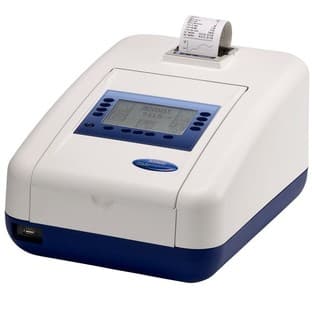
Jenway’s 73 series spectrophotometer range provides four models with a narrow spectral bandwidth of 5nm and an absorbance range of –0.3 to 2.5A,...