
logo
logo
Gastrin (GAST, GAS)

Cat no: G2020

Gastrin (GAST, GAS)

In humans, gastrin is a hormone that stimulates secretion of gastric acid (HCl) by the parietal cells of the stomach and aids in gastric motility. It is released by G cells in the stomach, duodenum, and the pancreas. Its existence was first suggested in 1905 by the British physiologist John Sydney Edkins,[1][2] and gastrins were isolated in 1964 by Gregory and Tracy in Liverpool.[3] The GAS gene is located on the long arm of the seventeenth chromosome (17q21).[4] Gastrin is a linear peptide hormone produced by G cells of the duodenum and in the pyloric antrum of the stomach. It is secreted into the bloodstream. Gastrin is found primarily in three forms: gastrin-34 ('big gastrin'), gastrin-17 ('little gastrin') and gastrin-14 ('minigastrin'). Also, pentagastrin, a five amino acid sequence artificially synthesized peptide, has a five amino acid sequence identical to the last five amino acid sequence at the C-terminus end of gastrin.\n\nGastrin is released in response to certain stimuli. These include: stomach distension, vagal stimulation (mediated by the neurocrine bombesin, or GRP in humans), the presence of partially digested proteins especially amino acids and hypercalcemia. Gastrin release is inhibited by the presence of acid (primarily the secreted HCl) in the stomach (a case of negative feedback) and Somatostatin, which inhibits the release of gastrin, along with secretin, GIP (gastroinhibitory peptide), VIP, glucagon and calcitonin.\n\nThe presence of gastrin stimulates parietal cells of the stomach to secrete hydrochloric acid (HCl)/gastric acid. This is done indirectly via binding onto CCK2/gastrin receptors on ECL cells in the stomach, which then responds by releasing histamine, which in turn acts in a paracrine manner on parietal cells stimulating them to secrete H+ ions. This is the major stimulus for acid secretion by parietal cells. Along with the above mentioned function, gastrin has been show to have additional functions as well: (i). Stimulates parietal cell maturation and fundal growth. (ii). Causes chief cells to secrete pepsinogen, the zymogen (inactive) form of the digestive enzyme pepsin. (iii). Increases antral muscle mobility and promotes stomach contractions. (iv) Strengthens antral contractions against the pylorus, and constricts the pyloric sphincter, which slows gastric emptying. (v). Plays a role in the relaxation of the ileocecal valve.[5] (vi). Induces pancreatic secretions and gallbladder emptying.[6] (vii). Impacts lower esophageal sphincter (LES) tone, causing it to relax.[7] Taking this into consideration, high levels of gastrin may play a role in the development of some of the more common LES disorders such as acid reflux disease.\n\nIn the Zollinger-Ellison syndrome, gastrin is produced at excessive levels, often by a gastrinoma (gastrin-producing tumor, mostly benign) of the duodenum or the pancreas. To investigate for hypergastrinemia (high blood levels of gastrin), a 'pentagastrin test' can be performed. In autoimmune gastritis, the immune system attacks the parietal cells leading to hypochlorhydria (low stomach acidity). This results in an elevated gastrin level in an attempt to compensate for low acidity. Eventually, all the parietal cells are lost and achlorhydria results leading to a loss of negative feedback on gastrin secretion.\n\nApplications: \nSuitable for use in RIA. Other applications not tested.\n\nRecommended Dilution:\nRIA: 5000 tests/ml\nOptimal dilutions to be determined by the researcher.\n\nAffinity Constant: 1.7 x 10e10 L/mole\n\nStorage and Stability:\nMay be stored at 4 degrees C for short-term only. For long-term storage and to avoid repeated freezing and thawing, add sterile glycerol (40-50%), aliquot and store at -20 degrees C or colder. Aliquots are stable for at least 12 months at -20 degrees C. For maximum recovery of product, centrifuge the original vial after thawing and prior to removing the cap. Further dilutions can be made in assay buffer.

Prices direct from United States Biological

Quick response times

Exclusive Biosave savings/discounts

SPECIFICATIONS

Catalog Number

G2020

Size

1ml

Hosts

Rabbit

Reactivities

Hum

Form

Neat serum. No preservative added.

P Type

Pab

Purity

(same/more than) 99% No contaminants detected. Single band by SDS-PAGE, IEP, and/or RID.

Isotype

IgG

References

General References: \n1. Edkins JS (13 Mar 1906). \"The chemical mechanism of gastric secretion\". J. Physiol. (Lond.) 34 (1-2): 133

Additional Info

Recognizes human Gastrin 17-I: 100%. Crossreactivity: Human Gastrin 17-II: 80%, Gastrin 33-II: 65%, Gastrin 13-I: 100%, Gastrin 34-II: 57%, Gastrin 13-II: 31%; CCK: < 0.1%

Read more on Supplier website

Applications

ELISA

Reactivities

Hum

More info

Applications

IF

Hosts

Mouse

More info

Applications

ELISA, WB

Hosts

Mouse

Reactivities

Hum

More info

Applications

ELISA, FC, WB

Hosts

Mouse

Reactivities

Hum

More info

Applications

ELISA, FC, IHC, WB

Hosts

Mouse

More info

Applications

IHC, WB

Hosts

Rabbit

Reactivities

Hum

More info

Applications

ELISA, WB

Hosts

Rabbit

Reactivities

Hum

More info
Advertisehere
MtoZ Horizontal banner
MtoZ Biolabs

Latest promotion FROM:

MtoZ Biolabs
View promotion

Latest promotions

Spend less time on DNA cleanup so you can do more science. The MSB Spin PCRapace is the fastest way to purify your DNA from PCR, restriction digestion, and...
New brilliant antibodies, and new lower prices!For flow cytometry reagents in general, \"bright is better.\" The violet-excitable BD Horizon&trade; BV421 and...

As an incentive to qualify our BSA, we are offering a 20% discount when you purchase your first 100g, 500g or 1000g of any grade of Bovine Serum Albumin....
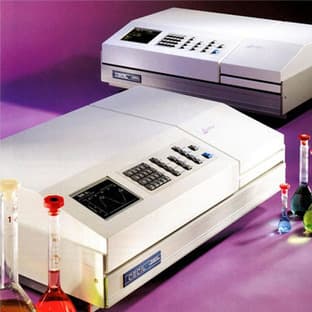
It is not every day that you are given something for nothing. We are giving away additional spectrophotometer software.Cecil Instruments have enhanced the...
We're so sure that you'll prefer Cayman Assay kits over your present brand that we're willing to give you a free assay kit to prove it!

Did your supplier increase the price of Fetal Bovine Serum? Did they substitute the US Origin with USDA? Well say no more! Innovative Research is still...

For the past decade scientists have extensively used ATS secondary toxin conjugates to make their own targeted toxins for in vitro use.The ability to combine...

10% Discount on 2 Rabbit Polyclonal Antibody Service. With over 20 years experience, SDIX has developed into the premier US custom antibody producer,...
Bulk Cytokines with Custom Vialing.20 - 50% off cytokines, growth factors, chemokines and more...For a limited time Cell Sciences is offering substantial...

Jenway&rsquo;s 73 series spectrophotometer range provides four models with a narrow spectral bandwidth of 5nm and an absorbance range of &ndash;0.3 to 2.5A,...

Are you planning to have a customised antibody made for your research?Since 2000, Everest has been producing a catalog containing thousands of affinity...