
logo
logo
Neurofilament H, phosphorylated (NF-H, NFH, NEFH) BioAssay(TM) ELISA Kit

Cat no: 031402

Neurofilament H, phosphorylated (NF-H, NFH, NEFH) BioAssay(TM) ELISA Kit

Neurofilament subunit subunit NF-H is one of the three so-called neurofilament triplet proteins which are major structural components of neurons. These proteins are particularly heavily concentrated in the axons of large projection neurons, where they are clearly occupy the majority of the cytoplasm. The NF-H molecule has a highly unusual protein sequence which includes a highly repetitive region made up of slight variants of the 6-8 amino acid sequences based on the peptide lysine-serine-proline (KSP in the single letter code). There are about 50 of these tandemly repeated peptides in known mammalian NF-H sequences, the exact number being a little variable in different species. Interestingly, the serine residues are not phosphorylated in dendritic and perikaryal neurofilaments but are heavily phosphorylated in axonal neurofilaments, so that antibodies which recognize the KSP phosphorylated from of NF-H, which we refer to as pNF-H, are excellent markers of axons (1,2). We have developed a sensitive ELISA kit to accurately quantify the level of expression of this protein in a variety of experimental situations. Since NF-H is expressed later in development, and becomes heavily phosphorylated later than the other two triplet proteins this kit can be used to monitor neuronal maturation. Neurofilament expression is up regulated in a variety of damage and disease states, and this kit can be used to accurately quantify this up regulation. We have also recently found that this kit can detect pNF-H in the sera of animals with spinal cord and brain lesions, suggesting the exciting possibility that pNF-H is a useful biomarker of neuronal and more specifically axonal injury or degeneration (3). Further studies show that this assay can detect informative levels of pNF-H in both the CSF and blood of humans suffering from a variety of neurological disorders (4,5,6). In fact, there are several reasons to think that pNF-H might an unusually useful and informative biomarker of axonal injury and degeneration. Firstly, pNF-H is an abundant component of axons as noted above, so should be released in relatively large quantity following axonal damage and degeneration. Secondly, it is unusually resistant to proteolysis, apparently partly due to the heavy phosphorylation (7,8), meaning that it is likely to be relatively long lived on release into CSF and blood, aiding its detection. Thirdly, the unusual multiepitope nature of the phosphorylation sites coupled with their great immunogenicity mean that pNF-H can be captured and detected with unusual avidity by appropriate immunoreagents. Finally, pNF-H detection reflects axonal injury and much recent evidence suggests that a variety of damage and disease states can be regarded as the result of axonal injury (e.g. 9,10). The unique geometry of neurons renders the axons particularly sensitive to mechanical injury or local loss of oxygen or metabolic substrates, and our assay can determine how much of this axonal injury has occurred. This kit was recently used to show that pNF-H levels were greatly elevated in the CSF of patients with subacute sclerosing panencephalitis, and that the levels detected correlated well with the state of progression of the disease (11). A newer version of the pNF-H ELISA was recently described (12) and shown to detect pNF-H in the plasma of patients suffering from Amyotrophic Lateral Sclerosis (ALS, a.k.a. Lou Gehrig's disease).\n\nTo develop this kit we purified a monoclonal antibody to pNF-H, 031395 and applied 50ng of this pure protein to each well of the ELISA dish. This is an unusually high affinity and specificity antibody which was selected out of several candidates for it's ability to pull pNF-H out of concentrated protein solutions (12). To detect the binding of pNF-H to this monoclonal antibody we made use of a second pNF-H monoclonal antibody, clone 031397. This antibody was directly labelled with horse radish peroxidase, providing an assay that is quicker and more convenient than our previous assay.\n\nThe kit contains one standard ELISA 96 well plate coated with the mouse antibody which has been blocked and so is ready to use. The plate can be separated into 8 individual 12 well strips. The kit include the detection antibody coupled to horse-radish peroxidase (HRP) and a pure pNF-H standard. We also include concentrated buffers, blocking protein and HRP substrate solution. Detailed instructions are also included.

Prices direct from United States Biological

Quick response times

Exclusive Biosave savings/discounts

SPECIFICATIONS

Catalog Number

031402

Size

96Tests

References

1. Sternberger LA, Sternberger NH. Monoclonal antibodies distinguish phosphorylated and nonphosphorylated forms of neurofilaments in situ. PNAS 80:6126-6130 (1983).\n\n2. Lee VM, Otvos L Jr, Carden MJ, Hollosi M, Dietzschold B, Lazzarini RA. Identification of the major multiphosphorylation site in mammalian neurofilaments. PNAS 85:1998-2002 (1998).\n\n3. Shaw G, Yang C, Ellis R, Anderson K, Parker Mickle J, Scheff S, Pike B, Anderson DK and Howland DR. Hyperphosphorylated neurofilament NF-H is a serum biomarker of axonal injury. Biochem Biophys Res Commun. 336:1268-1277 (2005).\n\n4. Petzold, A. and Shaw, G. Comparison of two ELISA methods for measuring levels of the phosphorylated neurofilament heavy chain. J Immunol Methods 319:34-40 (2007).\n\n5. Siman, R. et al. Biomarker evidence for mild central nervous system injury after surgically-induced circulation arrest. Brain Res. [Epub ahead of print] (2008).\n\n6. Lewis, S. et al. Detection of phosphorylated NF-H in the cerebrospinal fluid and blood of aneurysmal subarachnoid hemorrhage patients. J Cereb Blood Flow Metab. Epub Mar 5 (2008).\n\n7. Schlaepfer WW, Lee C, Lee VM, and Zimmerman UJ. An immunoblot study of neurofilament degradation in situ and during calcium-activated proteolysis, J. Neurochem. 44:502

Alternative Names

pNF-H

Read more on Supplier website

Applications

ELISA

Reactivities

Hum

More info

Applications

IF

Hosts

Mouse

More info

Applications

ELISA, WB

Hosts

Mouse

Reactivities

Hum

More info

Applications

ELISA, FC, WB

Hosts

Mouse

Reactivities

Hum

More info

Applications

ELISA, FC, IHC, WB

Hosts

Mouse

More info
Advertisehere
BMA Biomedicals Horizontal banner
BMA Biomedicals

Latest promotion FROM:

BMA Biomedicals
View promotion

Latest promotions

Spend less time on DNA cleanup so you can do more science. The MSB Spin PCRapace is the fastest way to purify your DNA from PCR, restriction digestion, and...
As an incentive to qualify our BSA, we are offering a 20% discount when you purchase your first 100g, 500g or 1000g of any grade of Bovine Serum Albumin....

New brilliant antibodies, and new lower prices!For flow cytometry reagents in general, \"bright is better.\" The violet-excitable BD Horizon™ BV421 and...
It is not every day that you are given something for nothing. We are giving away additional spectrophotometer software.Cecil Instruments have enhanced the...
For the past decade scientists have extensively used ATS secondary toxin conjugates to make their own targeted toxins for in vitro use.The ability to combine...

We're so sure that you'll prefer Cayman Assay kits over your present brand that we're willing to give you a free assay kit to prove it!

10% Discount on 2 Rabbit Polyclonal Antibody Service. With over 20 years experience, SDIX has developed into the premier US custom antibody producer,...

Did your supplier increase the price of Fetal Bovine Serum? Did they substitute the US Origin with USDA? Well say no more! Innovative Research is still...

Bulk Cytokines with Custom Vialing.20 - 50% off cytokines, growth factors, chemokines and more...For a limited time Cell Sciences is offering substantial...

Are you planning to have a customised antibody made for your research?Since 2000, Everest has been producing a catalog containing thousands of affinity...
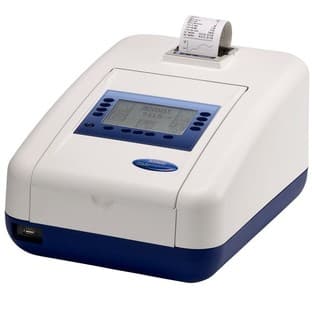
Jenway’s 73 series spectrophotometer range provides four models with a narrow spectral bandwidth of 5nm and an absorbance range of –0.3 to 2.5A,...