
logo
logo
NFkB, p65, Total, Human (NF-kB, Nuclear Factor kappa B, RelA) BioAssay(TM) ELISA Kit

Cat no: N2302-09

NFkB, p65, Total, Human (NF-kB, Nuclear Factor kappa B, RelA) BioAssay(TM) ELISA Kit

The Nuclear Factor-kappa B (NF-kB) transcription factors comprise a group of protein dimers which are composed of various combinations of members of the NF-kB/Rel protein family. In mammals, there are at least five members of this protein family, including NF-kB1 (p50 and its precursor p105), NF-kB2 (p52 and its precursor p100), c-Rel, RelA (p65), and RelB. In Drosophila, at least three members have been identified which are designated Dorsal, Dif, and Relish. All members of the NF-kB family share the Rel Homology Region (RHR), a domain of about 300 residues which mediates dimerization as well as DNA binding through the consensus sequence GGRNNYYCC. Within the Rel Homology Region is a subdomain designated the Nuclear Localization Sequence (NLS), which is involved in targeting NF-kB to the cell nucleus. While the RHR and NLS are common features of NF-kB family members, only certain members possess a transcriptional activation domain, such as RelA (p65). Dimers containing the p65 subunit serve as potent activators of transcription, while homodimers composed of the NF-kB1 (p50) subunit, which lacks the transcriptional activation domain, may actually repress transcription. Among mammalian NF-kBпїЅs, the p65/p50 dimer is the most abundant. Under resting conditions, NF-kB/Rel family members are sequestered in the cytoplasm in an inactive state through interaction with the IkB family members, which include the mammalian proteins IkBa, IkBb (with its splice variants IkBb1 and IkBb2), IkBg, IkBe, and Bcl-3, plus the precursors of NF-kB p105, and p100. This sequestration occurs through the interaction of IkBs ankyrin repeats with the RHR of the NF-kB transcriptional factors, an interaction that masks the Nuclear Localization Sequences. The most abundant mammalian IkBs include IkBa, IkBb1, IkBb2, and IkBe. \n\nThe transport of NF-kB/Rel family members into the nucleus requires their liberation from the IkBs. The series of events leading to the liberation of NF-kB from IkBa includes the phosphorylation of specific serine residues IkBa (serines 32 and 36) located near the amino terminus. IkBa is then marked by its polyubiquitination, and finally translocated to the 26S proteasome for degradation. The kinase responsible for the initial phosphorylation of IkBa, IKK, is a protein kinase complex with Mr=700kD composed of two kinase subunits designated IKKa (Mr=85kD) and IKKb (Mr=87kD), a regulatory subunit designated IKKg, which is also known as NEMO (Mr=48kD), and possibly several other components. \n\nDiverse stimuli that activate NF-kB through the degradation of IkB include TNFaa, IL-1b, LPS, viral infection, and various stresses. Among the wide array of genes under the control of NF-kB, are IL-6, VEGF, VCAM-1, and HIV long terminal repeat. NF-kBпїЅs regulation of IkB transcription provides a mechanism for NF-kBпїЅs limiting its own signaling. \n\nNF-kB mediates inflammatory responses, immune responses, responses to viral infections, cell division, and regulation of apoptosis, serving both as an anti-apoptotic signal as well as a pro-apopototic signal. Disease states in which NF-kB is improperly regulated include cancer, neurodegenerative diseases, and numerous diseases related to immune system dysregulation such as arthritis, asthma, and inflammatory bowel disease. Underscoring the importance of regulation of NF-kB by IkB in cancer is the observation that many multiple myelomas possess polymorphisms at IkB regulatory sites leading to improper regulation of NF-kB signaling. In these myelomas, the proteasome inhibitor PS-341, which favors the sequestration of NF-kB in the cytoplasm, is observed to be efficacious at down-regulating NF-kB dependent gene transcription and sensitizing chemoresistant cells. \n\nIntended Use:\nThe United States Biological NF-kBp65 (Total) ELISA is designed to detect and quantify the level of NF-kBp65 protein, independent of its phosphorylation state. Although performance characterization of this ELISA kit was done primarily on human cell lines, cross-reactivity of this kit with mouse cells was observed. Reactivity of this ELISA kit with other species is not assured. This kit has been configured for research use only and is not to be used in diagnostic procedures. \n\nSpecificity: \nNF-kBp65 standard (lyophilized cell extract from HeLa cells) was calibrated against the mass of a purified, truncated, recombinant NF-kBp65 protein expressed in E. coli. The assay was found to have no cross-reactivity with either NF-kBp50 or IkBa. Cross-reactivity with other NF-kB family members was not evaluated. This kit is observed to cross-react with mouse.\n\nSensitivity: \n<50pg/ml of Total NF-kBp65. This was determined by adding two standard deviations to the mean O.D. obtained when the zero standard was assayed 30 times.\n\nRange: 78.1-5000pg/ml\n\nIncubation Time: 4 hours\n\nSpecifications:\nSimple: Pre-coated strip-well plates\nLiquid stable chromogen and stop reagents.\n\nSample size: 10ul (diluted to a total volume of 100ul)\n\nPrecision: \nIntra-assay: (same/less than)8.4%\nInter-assay: (same/less than)10.9%\n\nKit Components:\n*N2302-09A: NF-kBp65 Standard 2x1vial. Supplied as a lyophilized powder. Reconstitute with 0.5ml N2302-09B: Standard Diluent Buffer.\nN2302-09B: Standard Diluent Buffer. 1x25ml Supplied as a liquid, sodium azide.\nN2302-09C: Microtiter Plate., 1x96 wells \nN2302-09D: Detection Antibody. 1x11ml Supplied as a liquid, 15mM sodium azide; blue dye.\nN2302-09E: IgG (HRP), 100x. 1x125ul Supplied as a liquid, 3.3mM thymol.\nN2302-09F: HRP Diluent. 1x25ml Supplied as a liquid 3.3mM thymol; yellow dye*; \nN2302-09G: Wash Buffer, 25x 1x100ml\nN2302-09H: TMB 1x25ml Light Sensitive\nN2302-09J: Stop Solution 1x25ml \n\n* In order to help our customers avoid any mistakes in pipetting the ELISAs, we provide colored Standard Diluent Buffer, Detection Antibody, and HRP Diluent to help monitor the addition of solution to the reaction well. This does not in any way interfere with the test results. \n\nStorage and Stability:\nStore * N2302-09A: NF-kBp65 Standard powder at 4 degrees C liquid at -70 degrees C. Store other components at 4 degrees C. Stable for 6 months. For maximum recovery of product, centrifuge the original vial after thawing and prior to removing the cap. N2302-09H: TMB is Light Sensitive, store in dark.\n

Prices direct from United States Biological

Quick response times

Exclusive Biosave savings/discounts

SPECIFICATIONS

Catalog Number

N2302-09

Size

96Tests

Applications

ELISA

Reactivities

Hum, Mouse

References

US Biological application reference: Kanitkar, M. et al., (2008) Br J Pharmacol. 155:702-713.

Read more on Supplier website
Advertisehere
BMA Biomedicals Horizontal banner
BMA Biomedicals

Latest promotion FROM:

BMA Biomedicals
View promotion

Latest promotions

Spend less time on DNA cleanup so you can do more science. The MSB Spin PCRapace is the fastest way to purify your DNA from PCR, restriction digestion, and...
New brilliant antibodies, and new lower prices!For flow cytometry reagents in general, \"bright is better.\" The violet-excitable BD Horizon&trade; BV421 and...

As an incentive to qualify our BSA, we are offering a 20% discount when you purchase your first 100g, 500g or 1000g of any grade of Bovine Serum Albumin....
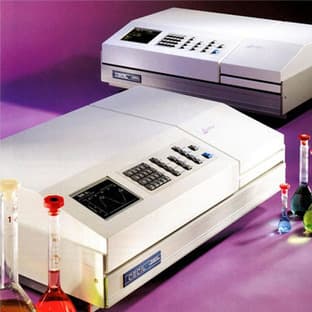
It is not every day that you are given something for nothing. We are giving away additional spectrophotometer software.Cecil Instruments have enhanced the...

Did your supplier increase the price of Fetal Bovine Serum? Did they substitute the US Origin with USDA? Well say no more! Innovative Research is still...

We're so sure that you'll prefer Cayman Assay kits over your present brand that we're willing to give you a free assay kit to prove it!

For the past decade scientists have extensively used ATS secondary toxin conjugates to make their own targeted toxins for in vitro use.The ability to combine...

10% Discount on 2 Rabbit Polyclonal Antibody Service. With over 20 years experience, SDIX has developed into the premier US custom antibody producer,...

Bulk Cytokines with Custom Vialing.20 - 50% off cytokines, growth factors, chemokines and more...For a limited time Cell Sciences is offering substantial...
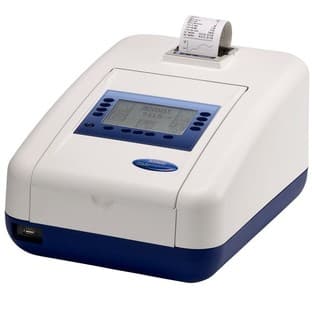
Are you planning to have a customised antibody made for your research?Since 2000, Everest has been producing a catalog containing thousands of affinity...

Jenway&rsquo;s 73 series spectrophotometer range provides four models with a narrow spectral bandwidth of 5nm and an absorbance range of &ndash;0.3 to 2.5A,...