
logo
logo
Nitric Oxide Synthase Assay Kit, BioAssay(TM)

Cat no: N2577-40

Nitric Oxide Synthase Assay Kit, BioAssay(TM)

Nitric oxide (NO) is a reactive radical that plays an important role in many key physiological functions. NO, an oxidation product of arginine by nitric oxide synthase (NOS), is involved in host defense and development, activation of regulatory proteins and direct covalent interaction with functional biomolecules.\n\nSimple, direct and non-radioactive procedures for measuring NOS are becoming popular in Research and Drug Discovery. Nitric Oxide Synthase Assay Kit involves two steps: a NOS reaction step during which NO is produced followed by an NO detection step. Since the NO generated by NOS is rapidly oxidized to nitrite and nitrate, the NO production is measured following reduction of nitrate to nitrite using an improved Griess method. The procedure is simple and the time required for sample pretreatment and assay is reduced to as short as 40 min.\n\nKey Features:\nSensitive and accurate. Detection range 0.25-25 U/L in 96-well plate.\nRapid and reliable. Can be completed in 40 min if reduction of NO3- to NO2- is performed at 60 degrees C.\n\nApplications:\nDirect Assays: NOS activity in biological samples.\nDrug Discovery/Pharmacology: effects of drugs on NOS activity.\n\nKit Contents: (100 tests in 96-well plates)\nAssay Buffer: 10ml Substrate: 600ul GDH: 120ul\nReagent A: 12ml Reagent B: 500ul Reagent C: 12ml\nReagent D: 600ul Reagent E: 1.5ml ZnSO4: 1ml\nStandard: 1ml N aOH: 1ml\nStorage conditions. The kit is shipped on ice. Store Assay Buffer, Substrate, Reagent D, Reagent E and GDH at -20 degrees C. Store all other reagents at 4 degrees C. Shelf life of three months after receipt. Precautions: reagents are for research use only. Please refer to Material Safety Data Sheet for detailed information.\n\nProcedures:\nPrior to assay, equilibrate all components to room temperature.\nPrewarm Assay Buffer to 37 degrees C. Keep GDH on ice.\nSample treatment: tissue or cell samples are homogenized in 1 x PBS (pH 7.4). Centrifuge at 10,000g or higher at 4 degrees C. Use supernatant for NOS assay.\nStandard preparation: Prepare 200ul 500uM Premix by mixing 100ul 1.0mM Standard and 100ul distilled water. Dilute standards in 1.5-mL centrifuge tubes as described in the Table.\nNo Premix+H2O Nitrite (uM)\n1 50ul+0ul 500\n2 30ul+20ul 300\n3 15ul+35ul 150\n4 0ul+50ul 0\nNOS Reaction: If samples will not require deproteination (i.e. purified NOS), add 20ul of each sample and standard to separate labeled eppendorf tubes. Each sample requires at least two tubes: one reaction tube and one sample blank tube. Immediately prior to starting the reaction, prepare enough NOS Working Reagent (NOS WR) for all sample reaction tubes and standards by mixing per reaction tube: 65ul Assay Buffer, 4ul Substrate, 4ul Reagent D, 10ul Reagent E and 1ul GDH. For the sample blanks, use 8ul dH2O instead of the Substrate and Reagent D. Add 80ul of the appropriate NOS WR to each tube and incubate at 37 degrees C for 20 min. After 20 min immediately add 200ul of the NO Detection Reagent (NO DR) (see next section: NO Measurement) to each tube to kill the NOS reaction. For samples requiring deproteination which include serum, plasma, whole blood, cell culture media containing FBS, tissue or cell lysates, add 25ul of each sample and standard to separate labeled eppendorf tubes. Each sample requires at least two tubes: one reaction tube and one sample blank tube. Immediately prior to starting the reaction, prepare enough NOS WR for all sample reaction tubes and standards by mixing per reaction tube: 80ul Assay Buffer, 5ul Substrate, 5ul Reagent D, 13ul Reagent E and 1ul GDH. For the sample blanks, use 10ul dH2O instead of the Substrate and Reagent D. Add 100ul of the appropriate NOS WR to each tube and incubate at 37 degrees C for 20 min. After 20 min immediately proceed to the deproteination step.\nDeproteination. Add 7ul ZnSO4 to each sample and standard tube. Vortex and then add 7ul NaOH. Vortex again and centrifuge 10 min at 14,000 rpm. Transfer 100ul of the clear supernatant to a clean tube and proceed to the NO Measurement step. NO Measurement: Immediately prior to starting the reaction, prepare enough NO Detection Reagent (NO DR) for all samples and standards by mixing per reaction tube: 100ul Reagent A, 4ul Reagent B and 100ul Reagent C. Add 200ul of the WR to each sample and standard tube and incubate for 5 min at 60 degrees C. (Alternatively, the reaction can be run at 37 degrees C for 60 min or RT for 150 min.) Briefly centrifuge the reaction tubes to pellet any condensation and transfer 250ul of each reaction to separate wells in a 96 well plate. Read OD at 500-570nm (peak 540 nm).\n\nCalculation:\nSubtract blank OD (Std 4) from the standard OD values and plot the OD against standard concentrations. Determine the slope using linear regression fitting. The NOS activity of the Sample is then calculated as\nODSAMPLE-ODBLANK\nSlope\nNOS Activity=X (U/L)\n1\nt\nODSAMPLE and ODBLANK are optical density values of the sample and sample blank, respectively. t is the reaction time (20 min).\nUnit definition: one unit of NOS catalyzes the production of 1uMole of nitric oxide per minute under the assay conditions (pH 7.5 and 37 degrees C).\n\nMaterials Required, But Not Provided:\nPipetting devices, eppendorf tubes, eppendorf centrifuge, clear, flat bottomed 96 well plates or cuvettes, plate reader or spectrophotometer and heat block or hot water bath (optional).\n\nGeneral Considerations:\nAntioxidants and nucleophiles (e.g. b-mercaptoethanol, glutathione, dithiothreitol and cysteine) may interfere with this assay. Avoid using these compounds during sample preparation. However, if b-mercaptoethanol or dithiothreitol must be used, an equal concentration needs to be added to the standards.

Prices direct from United States Biological

Quick response times

Exclusive Biosave savings/discounts

SPECIFICATIONS

Catalog Number

N2577-40

Size

1Kit

References

1. Ghigo, D. (2006). Cycling of NADPH by glucose 6-phosphate dehydrogenase optimizes the spectrophotometric assay of nitric oxide synthase activity in cell lysates. Nitric Oxide 15: 148-53.\n2. Knowles, R. G. and Moncada, S. (1994). Nitric oxide synthases in mammals. Biochem. J. 298: 249-58.\n3. Fo?rstermann, U. et al. (1991). Isoforms of nitric oxide synthase. Characterization and purification from different cell types. Biochem Pharmacol. 42: 1849-57.

Read more on Supplier website
Advertisehere
BMA Biomedicals Horizontal banner
BMA Biomedicals

Latest promotion FROM:

BMA Biomedicals
View promotion

Latest promotions

Spend less time on DNA cleanup so you can do more science. The MSB Spin PCRapace is the fastest way to purify your DNA from PCR, restriction digestion, and...
New brilliant antibodies, and new lower prices!For flow cytometry reagents in general, \"bright is better.\" The violet-excitable BD Horizon™ BV421 and...
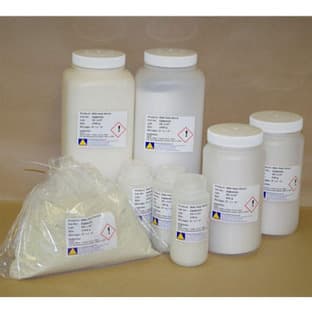
As an incentive to qualify our BSA, we are offering a 20% discount when you purchase your first 100g, 500g or 1000g of any grade of Bovine Serum Albumin....
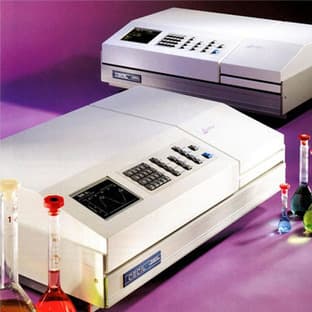
It is not every day that you are given something for nothing. We are giving away additional spectrophotometer software.Cecil Instruments have enhanced the...

Did your supplier increase the price of Fetal Bovine Serum? Did they substitute the US Origin with USDA? Well say no more! Innovative Research is still...

We're so sure that you'll prefer Cayman Assay kits over your present brand that we're willing to give you a free assay kit to prove it!

For the past decade scientists have extensively used ATS secondary toxin conjugates to make their own targeted toxins for in vitro use.The ability to combine...

10% Discount on 2 Rabbit Polyclonal Antibody Service. With over 20 years experience, SDIX has developed into the premier US custom antibody producer,...

Bulk Cytokines with Custom Vialing.20 - 50% off cytokines, growth factors, chemokines and more...For a limited time Cell Sciences is offering substantial...
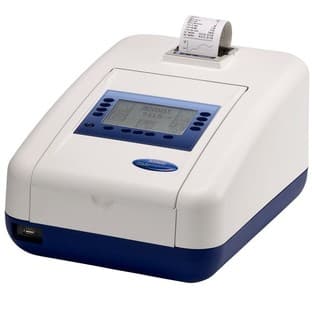
Are you planning to have a customised antibody made for your research?Since 2000, Everest has been producing a catalog containing thousands of affinity...

Jenway’s 73 series spectrophotometer range provides four models with a narrow spectral bandwidth of 5nm and an absorbance range of –0.3 to 2.5A,...