


Supplier:
United States BiologicalCat no: P3270-01
Pepsin, (same/more than)10,000u/g (Porcine)
Prices direct from United States Biological
Quick response times
Exclusive Biosave savings/discounts
SPECIFICATIONS
Catalog Number
P3270-01
Size
5g
References
Al-Janabi, J., Hartsuck, J., and Tang, J.: Kinetics and Mechanism of Pepsinogen Activation, J. Biol. Chem., 247, 4628 (1972).\nAnderson, W., and Harthill, J.: Pepsin Inhibitory Activity Amongst Activation Peptides of Pepsinogen, Nature, 243, 417 (1973).\nAndreeva, N.: Some Aspects of Structural Studies on Aspartic Proteases, Scand. J. Clin. Lab Invest., 52, Suppl. 210, 31 (1992\nAnson, M.: The Estimation of Pepsin, Trypsin, Papain and Cathepsin with Hemoglobin, J. Gen. Physiol., 22, 79 (1938\nArnon, R., and Perlmann, G.: The Amino Acid Composition of Chromatographically Purified Pepsinogen, J. Biol. Chem., 238, 653 (1963\nAuer, H., and Glick, D.: Early Events of Pepsinogen Activation, Biochem., 23, 2735 (1984\nBaker, L.: The Kinetics of the Action of Pepsin on Synthetic Substrates, J. Biol. Chem., 211, 701 (1954\nBasson, M., and Modlin, I.: Pepsinogen: Biological and Pathophysiologic Significance, J. Surgical Res., 44, 82 (1988\nBayliss, R., Knowles, J., and Wybrandt, G.: An Aspartic Acid Residue at the Active Site of Pepsin. The Isolation and Sequence of the Heptapeptide, Biochem. J., 113, 377 (1969\nBlumenfeld, O., and Perlmann, G.: Ultraviolet Difference Spectra of Pepsin, J. Gen. Physiol., 42, 563 (1959\nBlumenfeld, O., and Perlmann, G.: The Amino Acid Composition of Crystalline Pepsin, J. Gen. Physiol., 42, 553 (1959).\n\nBlumenfeld, O., Leonis, J., and Perlmann, G.: The Effect of Guanidine Hydrochloride on Crystalline Pepsin, J. Biol. Chem., 235, 379 (1960).\n\nBovey, F., and Yanari, S.: Pepsin, in The Enzymes, Vol. IV, (Boyer, P., Lardy, H., and Myrback, K., eds.), Academic Press, NY, 63 (1960).\n\nBustin, M., and Conway-Jacobs, A.: Intramolecular Activation of Porcine Pepsinogen, J. Biol. Chem., 246, 615 (1971).\n\nChen, K., and Tang, J.: Amino Acid Sequence Around the Epoxide-Reactive Residues in Pepsin, J. Biol. Chem., 247, 2566 (1972).\n\nChen, K., Tao, N., and Tang, J.: Primary Structure of Porcine Pepsin. I. Purification and Placement of Cyanogen Bromide Fragments and the Amino Acid Sequence of Fragment CB5, J. Biol. Chem., 250, 5068 (1975).\n\nClement, G., Rooney, J., Zakheim, K., and Eastman, J.: The pH Dependence of the Dephosphorylated Pepsin-Catalyzed Hydrolysis of N-Acetyl-L-Phenylalanyl-L-Tyrosine Methyl Ester, J. Am. Chem. Soc., 92, 186 (1970).\n\nCollins, J., and Fine, R.: The Enzymatic Digestion of Elastin at Acidic pH, Biochim. Biophys. Acta, 657, 295 (1981).\n\nCornish-Bowden, A., and Knowles, J.: A New Continuous Method for Following Pepsin-Catalyzed Reactions, Biochem. J., 96, 71p (1965).\n\nCornish-Bowden, A., and Knowles, J.: The pH-Dependence of Pepsin-Catalyzed Reactions, Biochem. J., 113, 353 (1969b).\n\nCornish-Bowden, A., Greenwell, P., and Knowles, J.: The Rate-Determining Step in Pepsin-Catalysed Reactions, and Evidence Against an Acyl-Enzyme Intermediate, Biochem. J., 113, 369 (1969a).\n\nCrobach, L., Kreuning, J., and Lamers, C.: Radioimmunoassay of Human Pepsinogen A and Pepsinogen C, J. Clin. Chem. Clin. Biochem., 27, 19 (1989).\n\nDelpierre, G., and Fruton, J.: Inactivation of Pepsin by Diphenyldiazonmethane, Proc. Natl. Acad. Sci., 54, 1161 (1965).\n\nDoleschel, W., and Auerswald, W.: Gel Diffusion Method for Determination of Pepsin, Clin. Chim. Acta, 49, 105 (1973).\n\nDunn, B., and Fink, A.: Cryoenzymology of Porcine Pepsin, Biochem., 23, 5241 (1984).\n\nErlanger, B., Vratsanos, S., Wassermann, N., and Cooper, A.: Specific and Reversible Inactivation of Pepsin, J. Biol. Chem., 240, 3447 (1965).\n\nEsumi, H., Yasugi, S., Mizuno, T., and Fujiki, H.: Purification and Characterization of a Pepsinogen and Its Pepsin from Proventriculus of the Japanese Quail, Biochim. Biophys. Acta, 611, 363 (1980).\n\nEtherington, D., and Taylor, W.: The Pepsins of Normal Human Gastric Juice, Biochem. J., 113, 663 (1969).\n\nEtherington, D., and Taylor, W.: The Pepsins from Human Gastric Mucosal Extracts, Biochem. J., 118, 587 (1970).\n\nEtherington, D., and Taylor, W.: The Separation and Preparation of Human Pepsins 3 and 5 From the Gastric Juice of Single Individuals, and the Mode of Action of Human and Swine Pepsins on the B-Chain of Oxidized Insulin, Biochim. Biophys. Acta, 236, 92 (1971).\n\nFinlay, T., Dharmgrongartama, E., and Perlmann, G.: The Mechanism of the Gossypol Inactivation of Pepsinogen, J. Biol. Chem., 248, 4827 (1973).\n\nFlavin, M.: The Linkage of Phosphate to Protein in Pepsin and Ovalbumin, J. Biol. Chem., 210, 6308 (1952).\n\nFrattali, V., Steiner, R., and Edelhoch, H.: Native and Unfolded States of Pepsinogen. I. The Molecular Conformation in Water and in Urea, J. Biol. Chem., 240, 112 (1965).\n\nFruton, J.: Bifunctional Inhibitors of Pepsin, Proc. Natl. Acad. Sci. USA, 68, 2765 (1971).\n\nGeratz, J.: a-Keto Analogues of Amino Acids as Inhibitors of a-Chymotrypsin, Carboxypeptidase A, and Pepsin, Arch. Biochem. Biophys., 111, 134 (1965).\n\nGlick, D.: A Kinetic Analysis of the Activation of Pig Pepsinogen by Chemical and Physical Techniques, Biol. Chem. Hoppe Seyler, 371, 289 (1990).\n\nGlick, D., Auer, H., Rich, D., Kawai, M., and Kamath, A.: Pepsinogen Activation: Genesis of the Binding Site, Biochem., 25, 1858 (1986).\n\nGlick, D., Hilt, C., and Mendemueller, L.: Conformational Change That Accompanies Pepsinogen Activation Observed in Real Time by Fluorescence Energy Transfer, Intl. J. Peptide Protein Res., 37, 2230 (1991).\n\nGlick, D., Shalitin, Y., and Hilt, C.: Studies on the Irreversible Step of Pepsinogen Activation, Biochem. USA, 28, 2626 (1989).\n\nGlick, D., Valler, M., Rowlands, C., Evans, J., and Kay, J.: Activation of Spin-Labeled Chicken Pepsinogen, Biochem., 21, 3746 (1982).\n\nGreen, M., and Llewellin, J.: Purification and Properties of a Fraction of Chicken Pepsin, Biochem. J., 128, 108P (1972).\n\nGreen, M., and Llewellin, J.: The Purification and Properties of a Single Chicken Pepsinogen Fraction and the Pepsin Derived from It, Biochem. J., 133, 105 (1973).\n\nGreenwell, P., Knowles, J., and Sharp, H.: The Inhibition of Pepsin-Catalyzed Reactions by Products and Product Analogs. Kinetic Evidence for Ordered Release of Products, Biochem. J., 113, 363 (1969).\n\nHarboe, M., Andersen, P., Foltman, B., Kay, J., and Kassell, B.: The Activation of Bovine Pepsinogen. Sequence of the Peptides Released, Identification of a Pepsin Inhibitor, J. Biol. Chem., 249, 4487 (1974).\n\nHartsuck, J., and Tang, J.: The Carboxylate Ion in the Active Center of Pepsin, J. Biol. Chem., 247, 2575 (1972).\n\nHartsuck, J., Koelsch, G., and Remington, S.: The High-Resolution Crystal Structure of Porcine Pepsinogen, Proteins-Structure Function and Genetics, 13, 1 (1992).\n\nHerriott, R.: Isolation, Crystallization and Properties of Swine Pepsinogen, J. Gen. Physiol., 21, 501 (1938).\n\nHerriott, R.: Inhibition of Pepsin by a Dipeptide
SUPPLIER INFO




Applications
ELISA
Applications
ELISA
Applications
ELISA
Applications
ELISA
Applications
ELISA
Applications
ELISA
Applications
ELISA


Latest promotions
Spend less time on DNA cleanup so you can do more science. The MSB Spin PCRapace is the fastest way to purify your DNA from PCR, restriction digestion, and...
New brilliant antibodies, and new lower prices!For flow cytometry reagents in general, \"bright is better.\" The violet-excitable BD Horizon™ BV421 and...
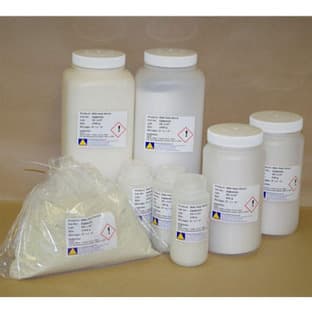
As an incentive to qualify our BSA, we are offering a 20% discount when you purchase your first 100g, 500g or 1000g of any grade of Bovine Serum Albumin....
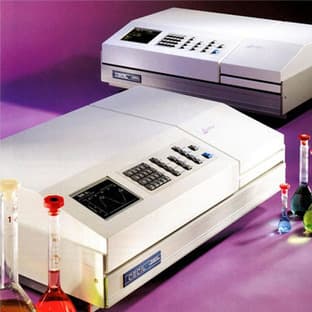
It is not every day that you are given something for nothing. We are giving away additional spectrophotometer software.Cecil Instruments have enhanced the...
Did your supplier increase the price of Fetal Bovine Serum? Did they substitute the US Origin with USDA? Well say no more! Innovative Research is still...

For the past decade scientists have extensively used ATS secondary toxin conjugates to make their own targeted toxins for in vitro use.The ability to combine...

We're so sure that you'll prefer Cayman Assay kits over your present brand that we're willing to give you a free assay kit to prove it!

10% Discount on 2 Rabbit Polyclonal Antibody Service. With over 20 years experience, SDIX has developed into the premier US custom antibody producer,...
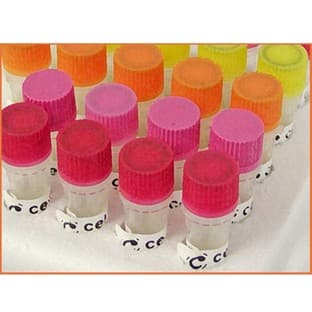
Bulk Cytokines with Custom Vialing.20 - 50% off cytokines, growth factors, chemokines and more...For a limited time Cell Sciences is offering substantial...
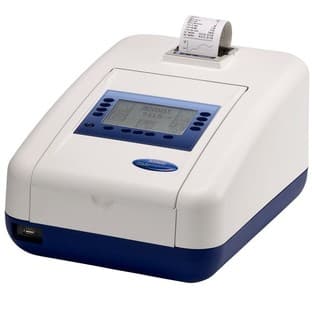
Jenway’s 73 series spectrophotometer range provides four models with a narrow spectral bandwidth of 5nm and an absorbance range of –0.3 to 2.5A,...

Are you planning to have a customised antibody made for your research?Since 2000, Everest has been producing a catalog containing thousands of affinity...
Top suppliers

United States Biological
230753 products

Carl Zeiss Microscopy
27 products

Promega Corporation
11 products

Panasonic Healthcare Company
5 products

Life Technologies
1 products

Nikon Instruments Europe
11 products

Olympus Europa Holding GmbH
3 products
Leica Microsystems, Inc.
10 products

GE Healthcare Life Sciences
2 products

Tecan Trading AG
19 products

Beckman Coulter, Inc.
1 products

AB SCIEX
3 products

BD (Becton, Dickinson and Company)
1 products

RANDOX TOXICOLOGY
5 products

Randox Food Diagnostics
6 products