
logo
logo
TRPC4 (Transient Receptor Potential-Like Channel 4, TRP4, CCE1)

Cat no: T8666-10A

TRPC4 (Transient Receptor Potential-Like Channel 4, TRP4, CCE1)

Cytosolic Ca2+ serves as an intracellular mediator for many extracellular signals. At rest, cells maintain a low Ca2+ concentration of ~ 10-7 M. Upon activation of the phospholipase C-dependent mechanism, the cytosolic Ca2+ concentration rises. In many vertebrate and invertebrate cells, the influx of Ca2+ is biphasic. Mobilization of Ca2+ from internal stores (sarcoplasmic reticulum in muscle cells and endoplasmic reticulum in other cell types) drives the initial burst. The second phase, referred to as capacitative Ca2+ entry (CCE) or store-operated Ca2+ entry, occurs when the depletion of intracellular Ca2+ stores activates a non-voltagesensitive plasma membrane Ca2+ conductance.1 The channels responsible for this conductance have been referred to as SOCs for store-operated channels. A Drosophila gene, trp (transient receptor potential), encodes the first identified candidate for such a channel. In recent years, seven mammalian TRP channels, named TRPC1-TRPC7, have been cloned. TRP channels (TRPCs) are ubiquitous, yet are most abundant in muscles and nerves. They differ in their method of activation and in their channel conductance.2 \n\nAll TRPCs have six transmembrane segments with a pore-forming loop between the fifth and sixth segment. This structure is similar to the pore-forming subunits of other channels including voltage-gated Na+, K+ and Ca2+ channels and cyclic nucleotide gated channels. The TRP isoforms can be divided into three subfamilies based on characteristic sequence domains. The long TRP channels (LTRPCs) have four related sequences with open reading frames (ORFs) coding for approximately 1600 amino acids. The other two subfamilies are characterized by shorter ORFs, coding for about 900 amino acids. These are called the short TRP (STRP) and osm-9-like (OTRP) channel families. The OTRPCs are named after the first member of this family to be identified, the C. elegans clone osm-9.2 The sub-families differ in other ways. STRPCs have two to four ankyrin domains in their N-terminal cytosolic tail, where as OTRPCs have three or more and LTRPCs have none. Furthermore, a proline-rich motif in the cytosolic C-terminal region near the sixth transmembrane segment can be found in STRPCs and LTRPCs, but not in OTRPCs.2 The sub-families also differ in their functional properties. \n\nThe seven mammalian TRPCs (TRPCs 1-7) are all members of the STRPC sub-family. STRPCs are activated in response to phospholipase C activation. OTRPCs appear to be activated by physical or chemical stimuli such as heat, osmotic stress or mechanical stress. The function and activation of LTRPCs is not yet known since their ability to function as channels has not been demonstrated. TRPC4 has been identified in adrenal gland, testis and brain.2 Full-length cDNAs have been cloned from bovine, human, mouse and rat species. TRPC4 is a non-selective cation channel that integrates signaling pathways from G-protein-coupled receptors and receptor tyrosine kinases independently of the depletion of calcium stores.3\n \nApplications:\nSuitable for use in Western Blot. Other applications not tested.\n\nRecommended Dilution: \nWestern Blot: 1:200\nOptimal dilution to be determined by researcher.\n\nPositive Control:\nRat Brain\n\nStorage and Stability:\nLyophilized powder may be stored at -20 degrees C. Reconstitute to nominal volume by adding sterile buffer. Aliquot and store at -20 degrees C. Reconstituted product is stable for 12 months at -20 degrees C. For maximum recovery of product, centrifuge the original vial after thawing and prior to removing the cap. Further dilutions can be made in assay buffer.\n\n

Prices direct from United States Biological

Quick response times

Exclusive Biosave savings/discounts

SPECIFICATIONS

Catalog Number

T8666-10A

Size

50ul

Applications

ELISA, WB

Hosts

Rabbit

Reactivities

Mouse, Rat

Form

Supplied as a lyophilized powder in PBS, pH 7.4,, 1% BSA, 5% sucrose and 0.025% sodium azide. Reconstitute with 0.05 ml deionized water.

P Type

Pab

Purity

Purified by immunoaffinity chromatography.

Isotype

IgG

References

1. Wes, P.D. et al., Proc. Natl. Acad. Sci. USA 92, 9652-9656 (1995). 2. Harteneck, C., et al., Trends Neurosci. 23, 159-166 (2000). 3. Schaefer, M. et al., J. Biol. Chem. 275, 17517-17526 (2000).

Additional Info

Recognizes rat and mouse TRPC4.

Read more on Supplier website
Advertisehere
BMA Biomedicals Horizontal banner
BMA Biomedicals

Latest promotion FROM:

BMA Biomedicals
View promotion

Latest promotions

Spend less time on DNA cleanup so you can do more science. The MSB Spin PCRapace is the fastest way to purify your DNA from PCR, restriction digestion, and...
As an incentive to qualify our BSA, we are offering a 20% discount when you purchase your first 100g, 500g or 1000g of any grade of Bovine Serum Albumin....
New brilliant antibodies, and new lower prices!For flow cytometry reagents in general, \"bright is better.\" The violet-excitable BD Horizon™ BV421 and...
It is not every day that you are given something for nothing. We are giving away additional spectrophotometer software.Cecil Instruments have enhanced the...
10% Discount on 2 Rabbit Polyclonal Antibody Service. With over 20 years experience, SDIX has developed into the premier US custom antibody producer,...
Did your supplier increase the price of Fetal Bovine Serum? Did they substitute the US Origin with USDA? Well say no more! Innovative Research is still...

We're so sure that you'll prefer Cayman Assay kits over your present brand that we're willing to give you a free assay kit to prove it!

For the past decade scientists have extensively used ATS secondary toxin conjugates to make their own targeted toxins for in vitro use.The ability to combine...
Bulk Cytokines with Custom Vialing.20 - 50% off cytokines, growth factors, chemokines and more...For a limited time Cell Sciences is offering substantial...

Are you planning to have a customised antibody made for your research?Since 2000, Everest has been producing a catalog containing thousands of affinity...
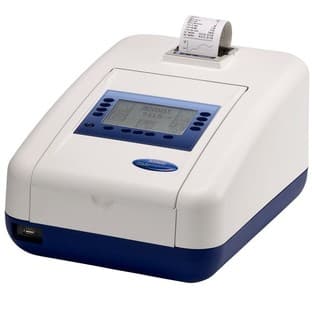
Jenway’s 73 series spectrophotometer range provides four models with a narrow spectral bandwidth of 5nm and an absorbance range of –0.3 to 2.5A,...