
logo
logo
Urokinase Plasminogen Activator Receptor ELISA Kit, BioAssay(TM) (uPAR)

Cat no: U2610-07

Urokinase Plasminogen Activator Receptor ELISA Kit, BioAssay(TM) (uPAR)

Urokinase-type plasminogen activator receptor (uPAR, CD87) is a cell surface receptor that binds urokinase-type plasminogen activator (uPA) with high affinity, thereby facilitating the pericellular activation of plasminogen (see references 1 and 2 for reviews). uPAR, uPA and plasminogen activator inhibitor-1 (PAI-1), form a triad with multiple functions, including regulation of cell attachment, migration, proliferation and differentiation, by both proteolytic and nonproteolytic mechanisms (2).\n\nuPAR is anchored to extracellular surfaces through a glycosyl phosphatidylinositol (GPI)\nlinkage, with no transmembrane domain (3). uPAR is synthesized as a 335-amino-acid\npolypeptide that includes a 22-residue signal peptide (4). A 30-residue peptide is cleaved from\nthe C-terminus during addition of the GPI anchor (3). With loss of the signal peptide and the\nC-terminal peptide, the mature protein has 283 amino acids. It is variably glycosylated,\nincreasing its mass from about 31kD for the protein backbone to as much as 55kD for the\nmature glycoprotein (5).\n\nPro-uPA, a single-chain protein, is activated to a disulfide-linked, two-chain protein by\nproteolytic cleavage by plasmin (1, 2, 6). Either pro-uPA or the active two-chain uPA bind with\nhigh affinity to uPAR. Thus, traces of plasmin activate pro-uPA to uPA, leading to increasing\ngeneration of plasmin in a positive feedback loop that is amplified by uPAR. While the initiating\nevent is not clear, the effect is the generation of plasmin at the cell surface, where it degrades\nthe extracellular matrix by activating matrix metalloproteinases. This appears to be a key event in tumor invasiveness and metastasis and in migration of cells in general (1, 2, 7).\nThe functions of the uPA/uPAR system are, however, more extensive than mediation of\nplasmin formation, and they include non-proteolytic functions (1, 2). uPA/uPAR is localized to focal contact points of cells within the substratum. These sites include intracellular vinculin and the extracellular adhesion molecule vitronectin, suggesting direct adhesive functions and intracellular signalling functions for uPAR. uPAR binds to integrins, and it contains chemotactic activity in its single protease-sensitive region. uPAR has been measured in human plasma (7-9). Soluble uPAR is generated by removal of the GPI anchor by an endogenous phospholipase D, freeing uPAR of its surface attachment 10). uPAR is elevated in plasma of patients with paroxysmal nocturnal hemoglobinuria (7, 8), a manifestation of an inability to add GPI anchors to proteins. It has been postulated that there also may be soluble uPAR due to alternative splicing of the primary transcript (1), as has been demonstrated for mouse uPAR (11). uPAR has been identified in urine, where the level is a consistent fraction of creatinine concentration (12).\n\nThe uPAR Immunoassay is a 4.5 hour solid-phase ELISA designed to measure human uPAR in cell culture supernates, serum, plasma, and urine. It contains NS0-expressed recombinant human uPAR and antibodies raised against the recombinant factor. It has been shown to accurately quantitate the recombinant factor. Results obtained using natural human uPAR showed linear curves that were parallel to the standard curves obtained using the kit standards. These results indicate that the uPAR kit can be used to determine relative mass values of natural uPAR.\n\nPrinciple:\nThis assay employs the quantitative sandwich enzyme immunoassay technique. A monoclonal antibody specific for uPAR has been pre-coated onto a microplate. Standards and samples are pipetted into the wells and any uPAR present is bound by the immobilized antibody. After washing away any unbound substances, an enzyme-linked polyclonal antibody specific for uPAR is added to the wells. Following a wash to remove any unbound antibody-enzyme reagent, a substrate solution is added to the wells and color develops in proportion to the amount of uPAR bound in the initial step. The color development is stopped and the intensity of the color is measured.\n\nKit Components:\nuPAR Microplate, 1x96 wells \nuPAR Conjugate, 1x21ml \nuPAR Standard, 1x40ng of recombinant human uPAR \nAssay Diluent, 1x11ml \nCalibrator Diluent, 1x21ml \nWash Buffer Concentrate (25X), 1x21ml \nColor Reagent A, 1x12.5ml of stabilized hydrogen peroxide.\nColor Reagent B, 1x12.5ml (tetramethylbenzidine).\nStop Solution, 1x6ml (2N sulfuric acid).\n\nStorage and Stability:\nStore components at 4 degrees C. Stable for 6 months. For maximum recovery of product, centrifuge the original vial after thawing and prior to removing the cap.

Prices direct from United States Biological

Quick response times

Exclusive Biosave savings/discounts

SPECIFICATIONS

Catalog Number

U2610-07

Size

1Kit

Applications

ELISA

References

1. Dear, A.E. and R.L. Medcalf (1998) Eur. J. Biochem. 252:185. 2. Blasi, F. (1997) Immunlogy Today 18:415. 3. Ploug, M. et al. (1991) J. Biol. Chem. 266:1926. 4. Roldan, A.L. (1990) EMBO J. 9:467. 5. Behrendt, N. (1990) J. Biol. Chem. 265:6453. 6. Blasi, F. et al. (1987) J. Cell Biol. 104:801. 7. Ronne, E. et al. (1995) Br. J. Haematol. 89:576. 8. Ploug, M. et al. (1992) Blood 79:1447. 9. Stephens, R.W. et al. (1999) J. Natl. Cancer Inst. 91:869. 10. Wilhelm, O.G. et al. (1999) J. Cellular Physiol. 180:225. 11. Kristensen, P. et al. (1991) J. Cell Biol. 115:1763. 12. Sier, C.F.M. et al. (1999) Lab. Invest. 79:717.

Read more on Supplier website

Applications

ELISA

Reactivities

Hum

More info

Applications

IF

Hosts

Mouse

More info

Applications

ELISA, WB

Hosts

Mouse

Reactivities

Hum

More info

Applications

ELISA, FC, WB

Hosts

Mouse

Reactivities

Hum

More info

Applications

ELISA, FC, IHC, WB

Hosts

Mouse

More info

Applications

IHC, WB

Hosts

Rabbit

Reactivities

Hum

More info

Applications

ELISA, WB

Hosts

Rabbit

Reactivities

Hum

More info
Advertisehere
MtoZ Horizontal banner
MtoZ Biolabs

Latest promotion FROM:

MtoZ Biolabs
View promotion

Latest promotions

Spend less time on DNA cleanup so you can do more science. The MSB Spin PCRapace is the fastest way to purify your DNA from PCR, restriction digestion, and...
New brilliant antibodies, and new lower prices!For flow cytometry reagents in general, \"bright is better.\" The violet-excitable BD Horizon™ BV421 and...
As an incentive to qualify our BSA, we are offering a 20% discount when you purchase your first 100g, 500g or 1000g of any grade of Bovine Serum Albumin....
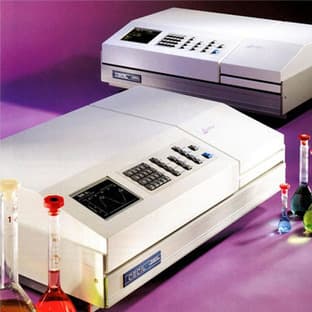
It is not every day that you are given something for nothing. We are giving away additional spectrophotometer software.Cecil Instruments have enhanced the...

We're so sure that you'll prefer Cayman Assay kits over your present brand that we're willing to give you a free assay kit to prove it!

10% Discount on 2 Rabbit Polyclonal Antibody Service. With over 20 years experience, SDIX has developed into the premier US custom antibody producer,...

For the past decade scientists have extensively used ATS secondary toxin conjugates to make their own targeted toxins for in vitro use.The ability to combine...
Did your supplier increase the price of Fetal Bovine Serum? Did they substitute the US Origin with USDA? Well say no more! Innovative Research is still...
Bulk Cytokines with Custom Vialing.20 - 50% off cytokines, growth factors, chemokines and more...For a limited time Cell Sciences is offering substantial...
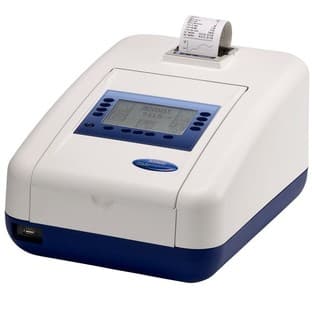
Jenway’s 73 series spectrophotometer range provides four models with a narrow spectral bandwidth of 5nm and an absorbance range of –0.3 to 2.5A,...

Are you planning to have a customised antibody made for your research?Since 2000, Everest has been producing a catalog containing thousands of affinity...