
logo
logo
Follicle Stimulating Hormone, Human (FSH) BioAssay(TM) ELISA Kit

Cat no: F5900-05H

Follicle Stimulating Hormone, Human (FSH) BioAssay(TM) ELISA Kit

Follicle-Stimulation Hormone (FSH) and Luteinizing Hormone (LH) are intimately involved in the control of the growth and reproductive activities of the gonadal tissues, which synthesize and secrete male and female sex hormones. The levels of circulating FSH and LH are controlled by these sex hormones through a negative feedback relationship. FSH is a glycoprotein secreted by the basophilic cells of the anterior pituitary. Gonadotropin-release hormone (GnRH), produced in the hypothalamus, controls the release of FSH from the anterior pituitary. Like other glycoproteins, such as LH, TSH, and hCG, FSH consists of subunits designated as alpha and beta. Hormones of this type have alpha subunits that are very similar structurally; therefore the biological and imunological properties are dependent on the unique beta subunits.In the female, FSH stimulates the growth and maturation of ovarian follicles by acting directly on the receptors located on the grannulosa cells; follicular steroidogenesis is promoted and LH production is stimulated. The LH produced then binds to the theca cells and stimulates steroidogenesis. Increased intraovarian estradiol production occurs as follicular maturation advances, thereupon stimulating increased FSH receptor activity and FSH follicular binding. FSH, LH, and estradiol are therefore intimately related in supporting ovarian recruitment and maturation in women. FSH levels are elevated after menopause, castration, and in premature ovarian failure. The levels of FSH may be normalized through the administration of estrogen, which demonstrate a negative feedback mechanism. Abnormal relationships between FSH and LH and between FSH and estrogen have been linked to anorexia nerbosa and polycystic ovarian disease. Although there are significant exceptions, ovarian failure is indicated when random FSH concentrations exceed 40 mIU/ml. The growth of the seminiferous tubules and maintenance of spermatogenesis in men are regulated by FSH. However, androgens, unlike estrogen, do not lower FSH levels, therefore demonstrating a feedback relationship only with serum LH. For reasons not fully understood, azospermic and oligospermic males usually have elevated FSH levels. Tumors of the testes generally depress serum FSH concentrations. High levels of FSH in men may be found in primary testicular failure and Klinefelter syndrome. Elevated concentrations are also present in cases of starvation, renal failure, hyperthyroidism, and cirrhosis.\n\nSample Type: \nSerum\n\nIntended Use: \nFor the quantitative determination of follicle-stimulation hormone (FSH) concentration in human serum.\n\nTest Principle: \nThe FSH Quantitative Test is based on a solid phase enzyme-linked immunosorbent assay (ELISA). The assay system utilizes a mouse monoclonal anti-a-FSH antibody for solid phase (microtiter wells) immobilization and another mouse monoclonal anti b-FSH antibody in the antibody-enzyme (horseradish peroxidase) conjugate solution. The test sample is allowed to react simultaneously with the antibodies, resulting in FSH molecules being sandwiched between the solid phase and enzyme-linked antibodies. After a 45-minute incubation at room temperature, the wells are washed with water to remove unbound-labeled antibodies. A solution of TMB Reagent is added and incubated at room temperature for 20 minutes, resulting in the development of a blue color. The color development is stopped with the addition of Stop Solution and the color is changed to yellow and measured pectrophotometrically at 450 nm. The concentration of FSH is directly proportional to the color intensity of the test sample.\n\nKit Components:\nMouse monoclonal anti-a-FSH antibody coated microtiter plate 1x96 wells.\nEnzyme Conjugate Reagent, 1x13ml.\nStandard, 0mIU/ml, 1x1vial \nStandard, 5mIU/ml, 1x1vial\nStandard, 15mIU/ml, 1x1vial\nStandard, 50mIU/ml, 1x1vial\nStandard, 100mIU/ml, 1x1vial\nStandard, 200mIU/ml, 1x1vial\nTMB Reagent (One-Step), 1x11ml.\nStop Solution (1N HCl), 1x11ml.\n\nStorage and Stability:\nStore all components at 4 degrees C. Stable for at least 6 months. For maximum recovery of product, centrifuge the original vial prior to removing the cap.

Prices direct from United States Biological

Quick response times

Exclusive Biosave savings/discounts

SPECIFICATIONS

Catalog Number

F5900-05H

Size

1Kit

Read more on Supplier website
Advertisehere
BMA Biomedicals Horizontal banner
BMA Biomedicals

Latest promotion FROM:

BMA Biomedicals
View promotion

Latest promotions

Spend less time on DNA cleanup so you can do more science. The MSB Spin PCRapace is the fastest way to purify your DNA from PCR, restriction digestion, and...
New brilliant antibodies, and new lower prices!For flow cytometry reagents in general, \"bright is better.\" The violet-excitable BD Horizon™ BV421 and...
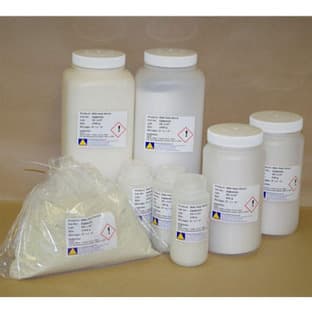
As an incentive to qualify our BSA, we are offering a 20% discount when you purchase your first 100g, 500g or 1000g of any grade of Bovine Serum Albumin....
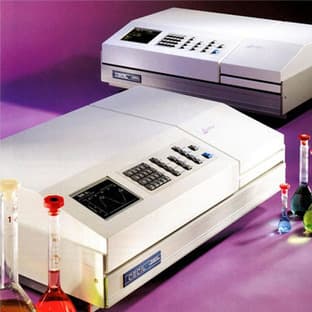
It is not every day that you are given something for nothing. We are giving away additional spectrophotometer software.Cecil Instruments have enhanced the...
Did your supplier increase the price of Fetal Bovine Serum? Did they substitute the US Origin with USDA? Well say no more! Innovative Research is still...

We're so sure that you'll prefer Cayman Assay kits over your present brand that we're willing to give you a free assay kit to prove it!

For the past decade scientists have extensively used ATS secondary toxin conjugates to make their own targeted toxins for in vitro use.The ability to combine...

10% Discount on 2 Rabbit Polyclonal Antibody Service. With over 20 years experience, SDIX has developed into the premier US custom antibody producer,...
Bulk Cytokines with Custom Vialing.20 - 50% off cytokines, growth factors, chemokines and more...For a limited time Cell Sciences is offering substantial...

Are you planning to have a customised antibody made for your research?Since 2000, Everest has been producing a catalog containing thousands of affinity...
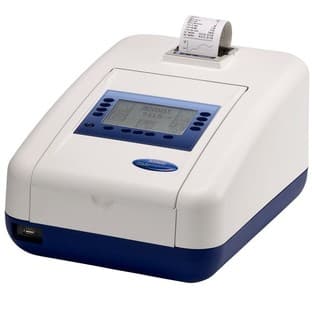
Jenway’s 73 series spectrophotometer range provides four models with a narrow spectral bandwidth of 5nm and an absorbance range of –0.3 to 2.5A,...