
logo
logo
NADP/NADPH Assay Kit (Nicotinamide Adenine Dinucleotide Phosphate), BioAssay(TM), Fluorimetric

Cat no: N0009-74

NADP/NADPH Assay Kit (Nicotinamide Adenine Dinucleotide Phosphate), BioAssay(TM), Fluorimetric

Pyridine nucleotides play an important role in metabolism and, thus, there is continual interest in monitoring their concentration levels. Quantitative determination of NADP+/NADPH has applications in research pertaining to energy transformation and redox state of cells or tissue.\n\nSimple, direct and automation-ready procedures for measuring NADP+/NADPH concentration are very desirable. NADP+/NADPH assay kit is based on a glucose dehydrogenase cycling reaction, in which the formed NADPH reduces a probe into a highly fluorescent product. The fluorescence intensity of this product, measured at lex/em=530/585 nm, is proportional to the NADP+/NADPH concentration in the sample. This assay is highly specific for NADP+/NADPH and with minimal interference (<1%) by NAD+/NADH. Our assay is a convenient method to measure NADP+, NADPH and their ratio.\n\nApplications:\nDirect Assays: NADP+/NADPH concentrations and ratios in cell or tissue extracts.\n\nKey Features:\nSensitive and accurate. Detection limit of 0.01uM and linearity up to 1uM NAD+/NADH in 96-well plate assay.\nConvenient. The procedure involves adding a single working reagent, and reading the fluorescence at time zero and 30 min. Room temperature assay.\nHigh-throughput. Can be readily automated as a high-throughput 96-well plate assay for thousands of samples per day.\n\nKit Contents:\nAssay Buffer: 10ml Enzyme A: 120ul\nGlucose (1 M): 1.5ml Enzyme B: 120ul\nProbe: 750ul NADP Standard: 0.5ml\nNADP/NADPH Extraction Buffers: each 12ml\nStorage conditions. Store all reagents at -20 degrees C. Shelf life: 6 months after receipt. Precautions: reagents are for research use only. Normal precautions for laboratory reagents should be exercised while using the reagents. Please refer to Material Safety Data Sheet for detailed information.\n\nGeneral Considerations:\n1. At these concentrations, the standard curves for NADP+ and NADPH are identical. Since NADPH in solution is unstable, we provide only NADP as the standard.\n2. This assay is based on an enzyme-catalyzed kinetic reaction. Addition of Working Reagent should be quick and mixing should be brief but thorough. Use of multi-channel pipettor is recommended.\n3. The following substances interfere and should be avoided in sample preparation. EDTA (>0.5mM), ascorbic acid, SDS (>0.2%), sodium azide, NP-40 (>1%) and Tween-20 (>1%).\n\nProcedures:\n1. Sample Preparation. For tissues weigh ~20 mg tissue for each sample, wash with cold PBS. For cell samples, wash cells with cold PBS and pellet ~105 cells for each sample. Homogenize samples (either tissue or cells) in a 1.5ml Eppendorf tube with either 100ul NADP+extraction buffer for NADP+ determination or 100ul NADPH extraction buffer for NADPH determination. Heat extracts at 60 degrees C for 5 min and then add 20ul Assay Buffer and 100ul of the opposite extraction buffer to neutralize the extracts. Briefly vortex and spin the samples down at 14,000 rpm for 5 min. Use supernatant for NADP+/NADPH assays. Determination of both NADP+ and NADPH concentrations requires extractions from two separate samples.\n2. Calibration Curve. Prepare 500ul 1uM NADP+ Premix by mixing 5ul 1mM Standard and 4995ul distilled water. Dilute standard as follows.\nNo Premix+H2O NADP (uM)\n1 100ul+0ul 1.0\n2 60ul+40ul 0.6\n3 30ul+70ul 0.3\n4 0ul+100ul 0\nTransfer 50ul standards into wells of a clear flat-bottom 96-well plate.\n3. Samples. Add 50ul sample per well in separate wells.\n4. Reagent Preparation. For each reaction well, prepare Working Reagent by mixing 40ul Assay Buffer, 1ul Enzyme A, 1ul Enzyme B, 10ul Glucose and 5ul Probe. Fresh reconstitution is recommended.\n5. Reaction. Add 50ul Working Reagent per well quickly. Tap plate to mix.\n6. Read fluorescence at lex/em=530/585 nm for time пїЅzeroпїЅ (F0) and F30 after a 30-min incubation at room temperature. Protect plate from light during this incubation.\n\nCalculation:\nFirst compute the DF for each Subtract standard and sample by subtracting F0 from F30. Plot the standard DFпїЅs and determine the slope. The NADP+ (H) concentration of the sample is computed as follows: \n[NADP(H)]-dFSAMPLE-dFBLANK пїЅ n (uM) Slope (uM-1)\nwhere DFSAMPLE and DFBLANK are the change in fluorescence intensity values of the Sample and Blank (STD 4) respectively. Slope is the slope of the standard curve and n is the dilution factor (if necessary).\nNote: If the sample DF values are higher than the DF value for the 1uM standard, dilute sample in distilled water and repeat this assay. Multiply the results by the dilution factor.\n\nMaterials Required, But Not Provided:\nPipetting (multi-channel) devices. Black, flat bottom 96-well plates and fluorescent plate reader capable of reading at lex/em=530/585 nm.

Prices direct from United States Biological

Quick response times

Exclusive Biosave savings/discounts

SPECIFICATIONS

Catalog Number

N0009-74

Size

1Kit

References

1. Zhao, Z, Hu, X and Ross CW (1987). Comparison of Tissue Preparation Methods for Assay of Nicotinamide Coenzymes. Plant Physiol. 84: 987-988.\n2. Matsumura, H. and Miyachi S (1980). Cycling assay for nicotinamide adenine dinucleotides. Methods Enzymol. 69: 465-470.\n3. Vilcheze, C et al. (2005). Altered NADH/NAD+ Ratio Mediates Coresistance to Isoniazid and Ethionamide in Mycobacteria. Antimicrobial Agents and Chemotherapy. 49(2): 708-720.

Read more on Supplier website
Advertisehere
BMA Biomedicals Horizontal banner
BMA Biomedicals

Latest promotion FROM:

BMA Biomedicals
View promotion

Latest promotions

Spend less time on DNA cleanup so you can do more science. The MSB Spin PCRapace is the fastest way to purify your DNA from PCR, restriction digestion, and...
As an incentive to qualify our BSA, we are offering a 20% discount when you purchase your first 100g, 500g or 1000g of any grade of Bovine Serum Albumin....
New brilliant antibodies, and new lower prices!For flow cytometry reagents in general, \"bright is better.\" The violet-excitable BD Horizon&trade; BV421 and...

It is not every day that you are given something for nothing. We are giving away additional spectrophotometer software.Cecil Instruments have enhanced the...

For the past decade scientists have extensively used ATS secondary toxin conjugates to make their own targeted toxins for in vitro use.The ability to combine...
We're so sure that you'll prefer Cayman Assay kits over your present brand that we're willing to give you a free assay kit to prove it!

10% Discount on 2 Rabbit Polyclonal Antibody Service. With over 20 years experience, SDIX has developed into the premier US custom antibody producer,...
Did your supplier increase the price of Fetal Bovine Serum? Did they substitute the US Origin with USDA? Well say no more! Innovative Research is still...
Bulk Cytokines with Custom Vialing.20 - 50% off cytokines, growth factors, chemokines and more...For a limited time Cell Sciences is offering substantial...
Are you planning to have a customised antibody made for your research?Since 2000, Everest has been producing a catalog containing thousands of affinity...
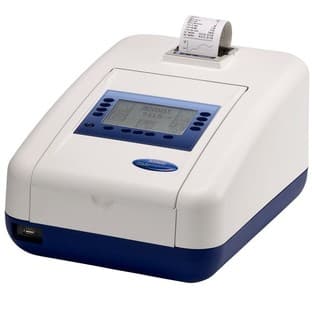
Jenway&rsquo;s 73 series spectrophotometer range provides four models with a narrow spectral bandwidth of 5nm and an absorbance range of &ndash;0.3 to 2.5A,...