
logo
logo
Synuclein, alpha (SNCA, 127750, P37840, MGC110988, NACP, PARK1, PARK4, non-A beta Component of AD Amyloid, NACP, Parkinson Disease Familial 1, PD1)

Cat no: S9500-03

Synuclein, alpha (SNCA, 127750, P37840, MGC110988, NACP, PARK1, PARK4, non-A beta Component of AD Amyloid, NACP, Parkinson Disease Familial 1, PD1)

Alpha Synuclein is a small (140-amino acid) cytoplasmic protein of unclear function that is enriched in presynaptic terminals and is the precursor protein of a nonamyloid beta component of senile plaques in Alzeheimer's Disease (AD). alpha -Synuclein is located predominantly in the presynaptic nerve terminals in the brain but is also found in low concentrations in all tissues except liver. Recent studies have shown that abnormal aggregation and accumulation of synaptic proteins, including alpha-Synuclein might be associated with plaque formation in AD and seems to be a major component of Lewy bodies in dementia with Lewy bodies (DLB). It has also been identified in the Glial Cytoplasmic Inclusions (GCIs) found in Multiple System Atrophy (MSA).\n\nAlpha Synuclein may be involved in the regulation of dopamine release and transport. Soluble protein, normally localized primarily at the presynaptic region of axons, which can form filamentous aggregates that are the major non amyloid component of intracellular inclusions in several neurodegenerative diseases (synucleinopathies). Induces fibrillization of microtubule- associated protein tau. Reduces neuronal responsiveness to various apoptotic stimuli, leading to a decreased caspase 3 activation.\n\nSize 140 amino acids; 14460D\n\nSubunit: Soluble monomer which can form filamentous aggregates. Interacts with UCHL1 (By similarity). Interacts with phospholipase D and histones.\n\nCellular Localization: Cytoplasm. Membrane. Nucleus. Note=Membrane- bound in dopaminergic neurons. Also found in the nucleus.\n\nTissue Specificity Expressed principally in brain but is also expressed in low concentrations in all tissues examined except in liver. Concentrated in presynaptic nerve terminals.\n\nDomain: SwissProt: P37840 The NAC domain is involved in the fibril formation. The middle region forms the core of the filaments. The C-terminus may regulate aggregation and determine the diameter of the filaments.\n\nPTM: Phosphorylated, predominantly on serine residues. Phosphorylation by CK1 appears to occur on residues distinct from the residue phosphorylated by other kinases. Phosphorylation of Ser-129 is selective and extensive in synucleinopathy lesions. In vitro, phosphorylation at Ser-129 promoted insoluble fibril formation. Phosphorylated on Tyr-125 by a PTK2B-dependent pathway upon osmotic stress. & Hallmark lesions of neurodegenerative synucleinopathies contain alpha-synuclein that is modified by nitration of tyrosine residues and possibly by dityrosine cross-linking to generated stable oligomers. & Ubiquitinated. The predominant conjugate is the diubiquitinated form (By similarity).\n\nDisease: SwissProt P37840. Defects in SNCA are a cause of autosomal dominant Parkinson disease 1 (PARK1) [MIM:168601, 168600]. Parkinson disease (PD) is a complex, multifactorial disorder that typically manifests after the age of 50 years, although early-onset cases (before 50 years) are known. PD generally arises as a sporadic condition but is occasionally inherited as a simple mendelian trait. Although sporadic and familial PD are very similar, inherited forms of the disease usually begin at earlier ages and are associated with atypical clinical features. PD is characterized by bradykinesia, resting tremor, muscular rigidity and postural instability, as well as by a clinically significant response to treatment with levodopa. The pathology involves the loss of dopaminergic neurons in the substantia nigra and the presence of Lewy bodies (intraneuronal accumulations of aggregated proteins), in surviving neurons in various areas of the brain. & Defects in SNCA are the cause of Parkinson disease 4 (PARK4) [MIM:605543, 168600]. & Defects in SNCA are the cause of Lewy body dementia (DLB) [MIM:127750]. DLB is a neurodegenerative disorder clinically characterized by dementia and parkinsonism, often with fluctuating cognitive function, visual hallucinations, falls, syncopal episodes, and sensitivity to neuroleptic medication. Presence of Lewy bodies are the only essential pathologic features. & Deposition of fibrillar amyloid proteins intraneuronally as neurofibrillary tangles is characteristic of Alzheimer disease (AD). SNCA is a minor protein found within these deposits, but a major non amyloid component. & Brain iron accumulation type 1 (NBIA1, also called Hallervorden-Spatz syndrome), a rare neuroaxonal dystrophy, is histologically characterized by axonal spheroids, iron deposition, Lewy body (LB)-like intraneuronal inclusions, glial inclusions and neurofibrillary tangles. SNCA is found in LB-like inclusions, glial inclusions and spheroids.\n\nMolecular Weight: 14-19kD\n\nPositive Control: Brain tissue\n\nApplications:\nSuitable for use in Western Blot and Immunohistochemistry. Other applications have not been tested.\n\nRecommended Dilution:\nWestern Blot: 1:1000-1:2000\nImmunohistochemistry (paraffin sections): 1:1000-1:2000\nImmunohistochemistry (frozen sections): 1:4000-1:12,000\nOptimal dilutions to be determined by the researcher.\n\nStorage and Stability:\nLyophilized powder may be stored at 4 degrees C for short-term only. Reconstitute to nominal volume by adding sterile 40-50% glycerol and store at -20 degrees C. Reconstituted product is stable for 12 months at -20 degrees C. For maximum recovery of product, centrifuge the original vial after thawing and prior to removing the cap. Further dilutions can be made in assay buffer.

Prices direct from United States Biological

Quick response times

Exclusive Biosave savings/discounts

SPECIFICATIONS

Catalog Number

S9500-03

Size

20ug

Applications

IHC, WB

Hosts

Rabbit

Reactivities

Hum, Rat

Form

Supplied as a lyophilized powder containing no preservatives. Reconstitute with 20ul of sterile distilled water. Centrifuge to remove any residue.

P Type

Pab

Purity

Purified by immunoaffinity chromatography.

Isotype

IgG

References

1. Iwai, A, et al., Neuron (1995) 14:467

Additional Info

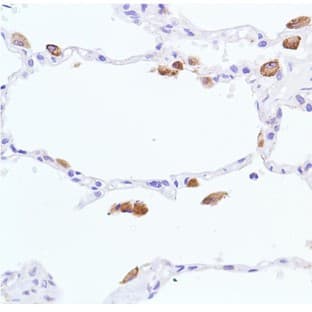
Recognizes alpha-synuclein. The immunizing peptide was chosen to reduce crossreactivity with beta-synuclein to a minimum. Immunohistochemical and Western blot analysis of human brain indicates a high level of specificity. Species Crossreactivity: Human and rat.

Read more on Supplier website
Advertisehere
BMA Biomedicals Horizontal banner
BMA Biomedicals

Latest promotion FROM:

BMA Biomedicals
View promotion

Latest promotions

Spend less time on DNA cleanup so you can do more science. The MSB Spin PCRapace is the fastest way to purify your DNA from PCR, restriction digestion, and...
New brilliant antibodies, and new lower prices!For flow cytometry reagents in general, \"bright is better.\" The violet-excitable BD Horizon™ BV421 and...
As an incentive to qualify our BSA, we are offering a 20% discount when you purchase your first 100g, 500g or 1000g of any grade of Bovine Serum Albumin....
It is not every day that you are given something for nothing. We are giving away additional spectrophotometer software.Cecil Instruments have enhanced the...
Did your supplier increase the price of Fetal Bovine Serum? Did they substitute the US Origin with USDA? Well say no more! Innovative Research is still...

We're so sure that you'll prefer Cayman Assay kits over your present brand that we're willing to give you a free assay kit to prove it!

For the past decade scientists have extensively used ATS secondary toxin conjugates to make their own targeted toxins for in vitro use.The ability to combine...

10% Discount on 2 Rabbit Polyclonal Antibody Service. With over 20 years experience, SDIX has developed into the premier US custom antibody producer,...
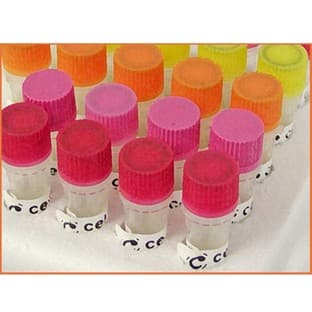
Bulk Cytokines with Custom Vialing.20 - 50% off cytokines, growth factors, chemokines and more...For a limited time Cell Sciences is offering substantial...

Are you planning to have a customised antibody made for your research?Since 2000, Everest has been producing a catalog containing thousands of affinity...
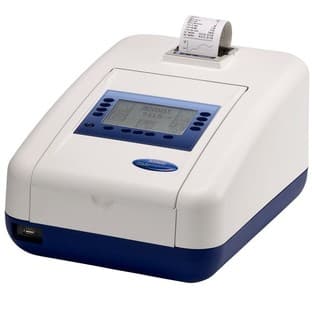
Jenway’s 73 series spectrophotometer range provides four models with a narrow spectral bandwidth of 5nm and an absorbance range of –0.3 to 2.5A,...